Wednesday, October 12, 2005

God, Culture and Paganism

I have been struck in the past by God's dealings with Pagans as recorded in the Old and New Testaments. In my Old Testament class at seminary we recently went through Genesis and Exodus, and I was reminded of God's dealings with Abraham and Jethro while they were still in Paganism. While little information is available for in-depth study, it appears as if God related and reveald Himself from within their cultures and drew upon elements of those cultures, including their Pagan religion.

This has caused me to reflect further on the relationship between culture and religion, and how this relates to God's dealings with Pagans in the past, as well as how this might relate to the present. I know that to raise the kinds of issues and questions that will come as a result of this post, especially the quote I will include below, is to invite questions and concerns about my orthodoxy, but I would ask my readers to refrain from judgment in order to ponder important questions.

I've mentioned Christian anthropologist Charles Kraft in a previous post. His book Christianity in Culture: A Study in Dynamic Biblical Theologizing in Cross-Cultural Perspective (Orbis, 1980), is thought provoking in the araes of culture, and cross-cultural theologizing. I present the following quote for creative contemplation:
"Paganism is, according to Maurier [Maurier, Henri. 1968. The Other Covenant: A Theology of Paganism. New York: Newman Press], the point at which God starts his saving process. Maurier claims that paganism has today enough information in it, as it has ever had, so that the addition of the proper communicational stimulus, can lead people to saving faith in God through Christ. Paganism thus, in some sense, stands in continuity with the Christian Gospel. We have usually assumed discontinuity and antagonism between Christianity and paganism. Yet it was within paganism that God stimulated Abraham (and countless others whose stories are not recorded in the Bible) to faith based largely on the knowledge they already possessed. In the Old Testament mention is made of a few of those outside Israel who apparently came to saving faith. Among them were Melchizedek (Gen. 14:18; cf. Ps. 110:4; Heb. 7)), Abimelech (Gen. 20), Jethro (Exod. 3), Balaam (Num. 22-24), Job, and Naaman (2 Kings 5). These came within paganism rather than within Israel to the same faith-allegiance to the true God that those saved within Israel experienced. In the New Testament, too, we get a glimpse of such a possibility when, in Acts 18:24-19:7, we see that there were roving bands of John the Baptist's disciples making converts without, apparently, even having heard of Jesus.

"If the message and method are the same today as they were in biblical times, we must ask the hard questions concerning the necessity of the knowledge of Christ in the response of contemporary 'pagans.' Can people who are chronologically A.D. but knowledgewise B.C. (i.e., have not heard of Christ), or those who are indoctrinated with a wrong understanding of Christ, be saved by committing themselves to faith in God as Abraham and the rest of those who were chronologically B.C. did (Heb. 11)? Could such persons be saved by 'giving as much of themselves as they can give to as much of God as they can understand?' I personally believe that they can and many have."
In light of Paganism in the Western world we might modify Kraft's question slightly. Not only are there Pagans who may never have heard of Christ at all, there are those who have heard of the all too common evangelical caricature of Jesus rather than the robust biblical Christ of the New Testament witness. (For those wondering what the differences might be see N. T. Wright. 1999. The Challenge of Jesus: Rediscovering Who Jesus Was and Is. Downers Grove, IL: InterVarsity Press.) Might contemporary Pagans in the West be B.C. in the sense of having rejected a misunderstood and caricatured Jesus rather than the biblical Jesus who has been communicated appropriately within their cultural contexts? And how does God's workings with Pagans in the Old and New Testaments from within their cultures, including their Pagan religions, inform our understanding of, relationships with, and theologizing among contemporary Pagans? Are the Old and New Covenants even the appropriate starting place for such questions, or should we back up to God's revelation in creation and imago Dei?

Monday, October 10, 2005

Utah Mormon Population Decline and Secularization: Disenchantment or Re-Enchantment?

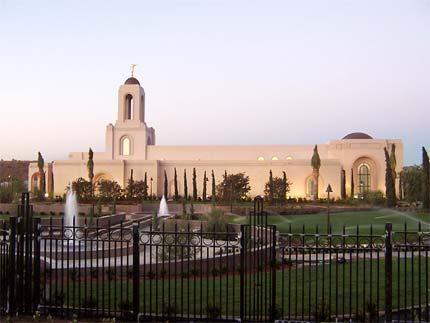
This last July The Salt Lake Tribune published an article that discussed the shrinking LDS population of the state of Utah. For years the LDS Church, as well as evangelical churches, have been making the claim that Mormons represent 70 percent of the population. This number appears to be inaccurate, with the percentage slipping to 62.4 percent by 2004.

A variety of reasons were cited for this decrease, including an increase in the number of non-Mormons moving into the state, declining birth rates among LDS families, and difficulties in keeping LDS converts within the church. One element was missing from the discussion, and that is the influence of secularization on the religious life of Utah. A demographer was quoted in the article as saying "Utah is essentially becoming more like the nation." I believe he's correct, but the manner in which these changes should be understood, and their importance for missions in Utah are worth exploring.

There are a variety of secularization theses, and I have discussed this briefly in previous comments on the work of U.K. scholar Christopher Partridge related to disenchantment and re-enchantment. One version of secularization sees religion dying on the vine in favor of secularism. Another version, one I resonate with, sees a disenchantment in the West coming as a result of secularzation, but rather than religion dying out, it is traditional forms of religion that have difficulty surviving (including various expressions of traditional Christianity). The pendulum then shifts and the response is re-enchantment, toward individualized, self-oriented, eclectic forms of spiritual expression, along the lines of Do-It-Yourself Spiritualities.

Even with the LDS majority religious population in Utah, it is difficult to imagine that the state is somehow immune to the forces of secularization. The social and cultural tides impacting the rest of the Western world have been touching on Utah's shores for some time, but the question remains as to which direction Utah's population is moving in response to secularization.

In dialogue with former Mormons in Utah I have discovered that when they jettison their LDS faith, they often find traditional Christianity just as inappropriate. Both "versions" of Christianity are, in their minds, tried and found wanting. Many I have spoken with have opted instead for DIY spiritualities and forms of Paganism. Although these alternative spiritual communities remain a small part of Utah's religio-spiritual communities, they may represent a growing segment of it.

What does all of this mean for missional churches and Christians in Utah? While we need to strategize in light of the dominant LDS population, we also need to recognize spiritual diversity, both within the LDS Church itself, and in the declining number of church members who may be turning to alternative forms of spirituality in the face of secularization. Church strategists might benefit from fresh ethnographic and demographic research in the state, and also consider ways in which Utah's minority emerging spiritualties might be missionally engaged.

Monday, October 03, 2005

Post-Modernism, Post-Creedal Christianity, and Truncated Eschatology

Last week I received an email notification through the Religion and Popular Culture Yahoo group concerning a fascinating conference in the U.K. The conference is sponsored by the Research Centre for Religion, Film and Contemporary Culture, University of Chester, UK. The title and subject matter of the conference is "The Lure of the Dark Side-Satan and Western Demonology in Popular Culture."

The conference involves Christopher Partridge, a scholar out of the U.K. who's work in the field of religious studies I appreciate and admire quite a bit. I've commented on his work previously in connection with his exchange with John Drane on the new spiritualities. In addition to Christopher Partridge, another scholar working with him in the area of popular culture, theology, and religious studies is Gordon Lynch. Lynch teaches at the University of Birmingham, and he is the author of a number of books, including Understanding Popular Culture (Blackwell, 2005), After Religion: 'Generation X' and the Search for Meaning (DLT, 2002), and Losing My Religion: Moving on From Evangelical Faith (DLT, 2004).

As I poked around Lynch's web page, and did some further research on Google, I came across an article he wrote titled "Dreaming of a Post-Credal Christianity." As conservative evangelicals read this article they will no doubt react to someone who has left their religious fold, and thoughtful reflection does leave sound intellectual reasons to disagree with Lynch's conclusions on the viability of a creedal expression of Christianity in the post-modern world. Some of the problems with Lynch's assessment have already been provided in comments provided by Matt Stone on his Blog. But before we get our feathers ruffled up in disagreeing with his views on creeds and propositions, I wonder whether evangelicals might benefit from not only finding areas with which to disagree with Lynch, but might also benefit positively through reflection in at least four other areas touched on in the article.

First, we need to take his reminder seriously that evangelicalism (and other expressions of Christianity) face serious challenges to credibility in the post-modern West. We put a lot of eggs in the basket of Christianity and rationality, but post-modernism seems to be more concerned with credibility, at least initially.

Second, we need to feel the pain and existential angst that Lynch experienced in his own loss of faith as an evangelical in the U.K. He lost his faith in creedal Christianity, and searches for some kind of alternative that will satisfy individuals in the new spiritual mileu. While some may disagree with his assessment of the viability of creedal aspects of Christianity, we must sympathize and emphathize with his angst and search. He is not alone in this quest, as the voices of growing numbers of evangelicals, and emerging spirituality adherents will attest.

Third, he recognizes that something important changed in the course of the development of Christianity as it moved to become an institutionalized religion in the West. The Hebraic emphasis on the relationality and embodiment of truth in persons, and ultimately God, which is and must be demonstrated in the lives of the believing community, has been lost (or at least seriously neglected) in favor of another emphasis on truth in terms of propositions, one more philosophical in response to modernity than relational in a Hebraic sense. As Lynch puts it:

"Now one of the most astonishing revisions of the gospel narratives in the history of the Church is the shift from the proclamation of the arrival of the Kingdom of God by Jesus of Nazareth to the notion that Christianity is fundamentally about adhering to a set of doctrines. Jesus understood his mission as being one of being a witness to the reign of God that he saw breaking into the world. And when Jesus saw signs of this reign taking shape here on earth, he saw it in particular moments of transformation. These were moments when the blind saw, the deaf heard, the lame leapt, those oppressed by demons were liberated, and the poor heard the good news that a new time was coming in which they would be valued and honoured. Jesus never saw the arrival of the Kingdom of God in terms of growing numbers of people adhering to some kind of doctrinal orthodoxy. Jesus' mission was one of effecting transformation here on earth, not of inducting people into a particular set of beliefs. Yet the gradual institutionalisation of the movement that Jesus set in progress has seen his emphasis on transformation in this world sometimes forgotten at the expense of that institution's desire for people to assent to its own particular way of thinking about the world. "
Fourth, in reflecting on Lynch's comments above we should be reminded that through Jesus' kingdom actions and announcements, his ministry of life transformation was truly eschatological, in the proper, robust, and Hebraic sense of the idea. N. T. Wright and other Third Quest scholars remind us of the central place of eschatology in Jesus' entire ministry. By contrast, our "end times" models seem more like truncated, if not emasculated versions of truly biblical eschatology.

Evangelicals have used a lot of toner, ink, and pixels in responding to epistemology and relativity in academic postmodernism. Might we have a few more things to learn if we stopped long enough to listen to the right questions being asked by popular level post-moderns? Even if we find their answers problematic, they seem to be asking the right questions, and we should be struggling with them too.

Thursday, September 29, 2005

Social Identity, Neotribes, and Modern Tribalism

How human beings think of themselves remains one of the foundational questions of human existence. The concept of personal identity has been defined in differing ways by human beings related to their historical and cultural contexts.

Christian missions has long been interested in this issue, and has defined the various ethne (Matt. 28:19) in a variety of ways in the course of her history. The current tendency in missiological circles is to define "people groups" in ethno-linguistic ways.

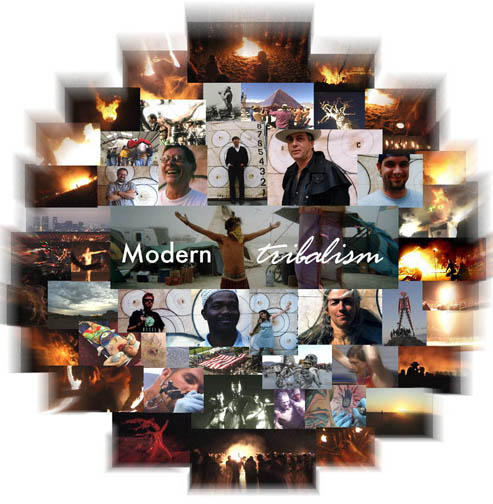
Modern and post-modern concepts of self add new twists to our thinking. It seems as if the increasing dissatisfaction with modernity and the self defined by consumerism and rationalism is giving way to more fluid concepts of self defined more by shared interests within social networks. Whether goths, vampires, tattooists, or Burning Man participants, these "neotribes" have found a sense of individual and cultural identity that they did not find in either modern secularism or the church. Psychology, sociology, anthropology, and religious studies have been researching these phenomena, and it may be time for the church to interact with these ideas and these people in greater ways.

In my continuing research in these areas as it relates to missiology I came across a documentary titled Modern Tribalism. If evangelicals can get past the initial shock to the sensibilities that this video brings, there is much we can learn about how an increasing number of people view contemporary society and the church. How might the concepts of social idenitty and neotribalism be applied to our understanding of the new religions and emerging spiritualities, both in terms of how we conceptualize and respond to them? How might a new awareness of the multiplicity of neotribes in our communities inform (revolutionize?) our concepts and activities of church as missional congregations? Will we continue to casually dismiss them as the lunatic fringe, or will we love them, learn of them (and from them), listen to their pain and criticism, and embrace them in ways that enables us to walk spiritual paths alongside of them, and in so doing, living and telling of the way of Jesus?

Wednesday, September 28, 2005

Seeing Ourselves as Others See Us: Rowe's I Love Mormons and LDS Blog Comments

The faculty and staff of Salt Lake Theological Seminary represent some of the institution's greatest assets. I have been privileged to develop a friendship with one of the professors, Dr. David Rowe. David has a new book that was published by Baker Books called I Love Mormons. At the conclusion of a dinner meeting last night Dave mentioned that he has been following comments on his book on a LDS Blog called Times and Seasons. Evangelicals will find the book review and comments on the site instructive, not only for their response to David's book, but also in learning to appreciate how the LDS see evangelicals, particularly in their evangelistic attempts. The book review may be found here:

http://www.timesandseasons.org/index.php?p=2563

Friday, September 23, 2005

Curt Watke and NeoTribal Wiki: New Tool for Missional Christians

A few years ago while doing some Internet research on neotribal concepts of self-identity and social groupings in western postmodern contexts, I ran across Dr. Curt Watke with the Intercultural Institute for Contexualized Ministry. Curt and I exchanged emails for some time but were never able to connect. To my great surprise he called me this week, and we met this morning for several hours in the greater Salt Lake City area in connection with a ministry and personal trip in the area.

Curt is a missional and visionary Christian. He appreciates the application of intercultural missions in the western postmodern, post-Christendom, retribalized context. An important concept for Curt is "neotribalism," which he defines variously as:

1. The organization, culture, or beliefs of a group similar to a tribe.
2. A strong feeling of identity with and loyalty to one’s tribe or group.
3. The fragmentation of North American society that causes a re-tribalization of culture.
4. A group of people with similar lifestyles, attitudes and consumer behavior who live together in common neighborhoods.
5. Not dependent on genealogy but on proximity and choice.

Curt has been working to educate and connect Christians in missional ways that will enable them to connect with the neotribal cultures and subcultures of their communities. One of the tools that Curt has been developing is NeoTribal Wiki. This is a missional knowledge database that has the potential to be very helpful to missional churches. It utilizes the information technology of the Wikipedia online encyclopedia. Within this framework NeoTribal Wiki has plugged in a wealth of demographic and cultural data from around the world that is in the process of being cross-referenced and segmented for missional application.

You have to take a look at the website for NeoTribal Wiki to fully understand and appreciate it, and keep in mind that this missional tool is currently in pre-launch construction, but perhaps a few examples will help to illustrate the value and potential of this resource.

For example, if you click on Browse by Categories, and then select Community Studies, followed by North American Community Studies, you can eventually work your way to a South Carolina Community Study which provides a wealth of data that can prove invaluable to pastors, church planters, and missionaries. Curt and his associates will be adding to this database and including statistical data on other states in the U.S. International data is available as well.

As another example for those working in missions to emerging spiritualities, going back to Browse by Categories, you will see that other divisions of information and topics are of missional value as well. Continuing on the neotribal concept, Curt includes categories such as Religious Neotribes, Spiritual Neotribes, Postmodern Neotribes, and Youth Neotribes. Once developed, these categories help provide what Curt calls "missional culturescapes" that compliment the other areas of missional knowledge in this database that can be shared and studied to assist in the formation of culturally informed mission strategy.

After I reviewed just a little of the information in this missional base I came to the conclusion that this may represent a tool for missions that can revolutionize missional approaches in America and beyond.

Curt was interested in sharing this project with me, and my involvement in overseeing the development of the Spiritual NeoTribes section of NeoTribalWiki, and in working as a Research Associate. I will be contacting colleagues in my network in the hopes of recruiting their involvement and contributions to this project.

I encourage missional thinking Christians to check out this exciting resource.

Monday, September 19, 2005

Let's Do Our Homework and Engage in Personal Dialogue: Final Comments on Mariners Church and the LDS Temple

As the comments section of the post on Mariners Church and the LDS temple indicates, this post has drawn the attention of some in the countercult. I attempted a brief response, but this is a large and important issue. On further review of the entire article written by Keith Walker I noted several problems in understanding of the perspectives of those advocating missional and relational approaches to LDS, an inability to make a distinction between Mariners Church's approach and other missional and relational approaches to LDS, a false dichotomy between relational evangelism and confrontation, confrontational rhetoric, poor reasoning, a lack of any criteria of methodology, anecdotal testimonies presented as solid evidence for countercult praxis, and a general failure to interact with relevant perspectives on the issues as raised by this Blog and many other sources not the least of which is missiology and the history of Christian missions.

The intention of this Blog is to post comments, and to have brief comments in response, on key issues related to mission, theology, and praxis among emerging spiritualities and new religions in the 21st century. It is not a forum to bring folks up to speed with the wealth of material that provides a background for these comments. Effective dialogue on this topic can only take place if we bring a similar level of awareness to the issues. (I have extensive prior experience in countercult theory and praxis, and I would ask my countercult critics to bring some missional background to the discussion.) Therefore, Mr. Walker will be permitted to provide a very brief response to my comments on his article excerpt, this is not the forum for extensive commentary. Mr. Walker, and other interested parties in the countercult community, are free to familiarize themselves with the relevant background data and to then enter into personal dialogue with me (rather than continuing the Blog and email exchanges) as my academic and ministry schedule permits.

In the meantime, I will move on to post on other topics as they relate to the purpose envisioned for this Blog.

Saturday, September 17, 2005

Sci Fi, Fantasy, Horror, and 'Reel' Spirituality

I still remember one night in the 1970s when my dad gave my younger brother and I the option of watching The Wonderful World of Disney on television as part of our regular family habit, or a horror film on another channel. The curiosity of youth being what it was, we chose the horror film, and our first exposure to the genre through The Creature From the Black Lagoon began a love affair with not only horror, but science fiction and fantasy as well.

Given evangelicalism's frequent connection of horror with "the occult," after my conversion to Christianity I though such passions had to be jettisoned as part of my new life. Much to my surprise and joy, I discovered that other Christians were also interested in these genres, and that they did not find them incompatible with the Christian life. In my research in the area of emerging spiritualities and popular culture years later, I discovered that these genres of entertainment were important aspects of emerging culture, and ones that the evangelical world needs to consider if it wishes to be relevant to post-modern culture. In this post I will pass along a few thoughts that have come to mind recently after some posts at Matt Stone's Blog Eclectic Itchings.

Evangelicals have tended to either react confrontationally to aspects of popular culture, or to downplay its significance as opposed to "high culture." Scholars now recognize the significance of popular culture o aspects of broader culture and spirituality in the shaping of western plausibility structures. The secularization of the West has resulted in the desire for a re-enchantment of the world, and this is being explored in a number of ways in popular culture. Science fiction, fantasy, and horror in literature and film have been used as vehicles to both express and explore aspects of new religions and emerging spiritualities, and as mythic resources with which to shape new spiritualities for a post-modern age.

In the area of the exploration of spirituality for new religions, Mormonism has great sympathies with science fiction. It has served well as a genre to creatively express aspects of their cosmology. LDS author Orson Scott Card has incorporated aspects of LDS cosmology in his novels, and it is well known that the original Battlestar Galactica series of the 1970s incorporated modified versions of LDS cosmology, although there is less emphasis on it in the current Sci Fi Channel version of the program.

Fantasy has long been drawn upon to express and explore spirituality, from Tolkien and C. S. Lewis incorporating or expressing elements from Christianity, to Paganism and Wicca in more recent authors.

But not only are these genres serving as vehicles to express spirituality, we are also seeing emerging spiritualities that are drawing upon these genres as both mythic sources by which to create new spiritualities, as well as to express and explore them. Australian scholar Adam Possamai provides several examples including The Church of Satan, and the Church of All World, as well as other exotic new spiritualities, such as The Temple of the Vampyre drawing upon vampire fiction, Jediism drawing up the Star Wars films, and Matrixism based upon The Matrix film trilogy.

A few years ago when the Lord of the Rings film trilogy was still unfolding, TIME magazine wrote a story on the phenomenal success of the films that included an interesting sidebar. It discussed the increasing popularity of fantasy films and the apparent decline in popularity of science fiction. This got me to thinking and I'll pass along a few thoughts for consideration. Science fiction has served well as a forum for expressing ideas related more to materialist philosophies. With Mormonism's emphasis on materialism, where even spirit itself is another form of the material, Mormon cosmology fit in well with the science fiction genre's materialist leanings. Science fiction literature and films continue to be popular, but with the cultural shift toward re-enchantment fantasy films (and horror that includes a supernatural element) will likely continue to find a ready audience in the Western world. Those who may disagree with this idea given the popularity of the Star Wars films since the 1970s might take note that although Lucas' films are expressed in the garb of sci fi they are more properly classified as a space fantasy.

While evangelicals may express incredulity in response to such new spiritualities and the pop culture sources behind them, nevertheless, they represent serious spiritual and social phenomena that are proving increasingly attractive to those in the West, particularly younger people. Christopher Partridge notes that these literary and cinematic sources serve as popular sacred narratives that represent "connections between the occult and arts-based culture, particular literature, film and video games..."

I wonder whether it might be possible (from the above it would surely be profitable) for evangelicals to spend less time fighting expressions of emerging spiritualities in popular culture and instead spend more time as students of popular culture so that we might understand the contemporary spiritual milieu, and where Western culture is spiritually "itching," in order that we might actually scratch them where they itch rather than where we think they should itch. And while some of us are complaining about the popularity of J. K. Rowling with the Potter books, how about writing a series of books, or producing some films that draw upon fantasy, horror, and science fiction to creatively and subtly explore Christian spirituality?

Just a few thoughts.

Suggested Reading

Tom Beaudoin, Virtual Faith: The Irreverent Spiritual Quest of Generation X (Jossey-Bass, 1998).

Michael R. Collings, "The Rational and Relevatory in the Science Fiction of Orson Scott Card," Sunsone 11, no. 3 (May 1987): 7-11.

Christopher Partridge, The Re-Enchantment of the West, vol. 1 (T & T Clark International, 2004). See his discussion of secularization and re-enchantment, as well as popular occulture in literature and film.

Adam Possamai, Religion and Popular Culture (P.I.E.-Peter Lang, 2005).

Sandy and Joe Straubhaar, "Science Fiction and Mormonism," Sunstone 6, no. 4 (July/August 1981): 52-56.

Tuesday, September 13, 2005

A Missional Theology of Relationships

The other day I was thumbing once again through George Hunter's book How to Reach Secular People (Abingdon Press, 1992). Among other things, he has a discussion of relational theology that provoked some thinking in me related to missional ways of being in the postmodern West.

Hunter quotes from Bruce Larson who writes about four aspects of relational theology, including "our relationship to God, our relationship to ourselves, our relationship to the 'significant others' in our lives, and our relationship to the world" (Hunter, 137). It is with the fourth relational element that I did some further thinking on in the context of missional ways of being for Christians in the twenty-first century.

Larson defines our relationship to the world as characterized by "identification, involvement, and service." These characterizations fit in perfectly with an incarnational missions approach among emerging cultures. Christian disciples must identify lovingly with the people, and incarnate in their midst. They must become involved meaningfully and intentionally in their culture, and not merely in utilitarian fashion. And they must engage in selfless acts of service to the peoples they love.

This relational theology and praxis is in stark contrast from what Larson and Hunter refer to as "sterile forms of orthodoxy," and which we might identify with traditional forms of "outreach" to adherents of postmodern, emergent, and alternative spiritualities. Noting the significance of this contrast, Hunter quotes Larson to say that

"the Bible deals primarily with relationships and only indirectly with
doctrine.... Reading the Bible convinces me that the real test of 'orthodoxy' has to do with the quality of relationships far more than with doctrinal stands. Life's real problems are obviously relational; they are only indirectly doctrinal....Certainly [doctrine] may explain to a degree what sin is, and what grace is, but doctrine per se is not the very stuff of life. It merely describes life without enabling it....We are not trying to make people believe 'the right things' so much as enabling them to experience a relationship with God and with one another." (Hunter, 140)
There is precedence for such an emphasis and thinking in the history of Christian missions. The Celtic Christian movement emphasized Christian community, and a sense of belonging and relationships over doctrinal propositions and believing. This extension of Kingdom relationships then became the living, relational context in which faith (and its doctrinal content) could be born nurtured.

A few individuals ministering with a new paradigm among new religions which emphasizes the importance of relationships, flowing out of a theology of relationships as part of a broader missional theology, have been the objects of criticism by evangelicals for deep relational involvement with "heretics." Yet is such a relational theology really out of bounds? Is there biblical room for such theological development? Does it not have some precedent in the history of Christian missions? And what might it "look like" if we placed less emphasis on a theology of information and propositional proclamation, and instead reframed it within the context of missional relationships?

What might be the results for both Christian disciples and the peoples among whom we live and minister if we developed a theology of relationships for the twenty-first century?

Thursday, September 08, 2005

Boniface and History of Missions: Toward a Criteria of Methodology

How do we determine missions strategy? Churches and parachurch agencies are engaged in missions, and utilizing various strategies to accomplish the task, but how might we pause and reflect critically on methodology? The dovetailing of a discussion in my seminary class on the history of Christian missions, and a post on another Blog, come together to provide us with some helpful ideas.

In The History of Christian Missions class at Salt Lake Theological Seminary we recently looked at Roman Catholic missions as discussed in Ruth Tucker's book, From Jerusalem to Irian Jaya (Zondervan, 2004). One of the figures we read about and discussed as a class was Boniface, who worked as a missionary in Germany among Pagans in the Middle Ages. Boniface felt that dramatic action was necessary in order to communicate to Pagans at Geismar, and he decided that chopping down a sacred oak tree identified with the Thundergod was an appropriate course of action. Althought the act was defiant, there was a positive outcome in that the Pagans viewed it as a victory of Boniface's God over that of the Pagans. Boniface was encouraged by the reaction of the Pagans and it emboldened him to continue in confrontational fashion among the Pagans, resulting in his destruction of temples, shrines, and sacred stones.

As our seminary class discussed Boniface I was asked by a fellow student for my views on his destruction of the sacred symbol of the Pagans, and how this might relate to my call for greater emphasis on missional approaches in the West among emerging spiritualities. I responded by noting that although Boniface continued his ministry in confrontational fashion for some time following this event, he later questioned the validity of this aggressive approach. He later abandoned this approach in favor of building monastic communities which served as mission outposts.

Another historical consideration comes from comparison of the approaches of other Roman Catholic missionaries, Raymond Lull and Francis of Assissi, both working among Muslims. Lull engaged in a threefold approach that included apologetics, education, and evangelism. Lull's approach was aggressive, and Tucker notes that although he claimed to reach out to Muslism lovingly, "his message was often very offensive, and may have further embittered the Muslims toward Christianity." By contrast, Francis "proposed that the Muslims should be won by love instead of hate." His approach involved dialogue, relationships, and service.

How might these examples from the history of Christian missions inform our missional task in the twenty-first century? And how did I relate these examples to my response to my fellow student?

The history of Christian missions provides for us a number of examples from those who have come before us and who have ministered in a variety of differing cultural and historical circumstances. They need to be considered individually and collectively in these differing contexts, and then with appropriate adjustments, application can be made to our own circumstances.

I believe that one of the things we can learn from such examples is the need for balance. Contrary to some misunderstandings of my views, I am not opposed to apologetics or confrontation in missions encounters. Boniface provides us with one example that may have been appropriate for his cultural context. However, simply because Boniface was confrontational among Pagans at Geismar does not mean that similar approaches were appropriate at other times in his ministry, or that they should be normative for us. How the should we understand such important historical examples and formulate a strategy and application for the present day?

One of my favorite Blogs is that of Ryan Bolger. Ryan is a missiologist who teaches at Fuller Seminary. I had the pleasure of hearing him speak at a conference at Fuller in 2004. Ryan recently posted a discussion on his Blog that mentioned his teaching method in one of his classes. (See the link to Ryan's BolgBlog in the Blog links in the right hand column of my Blog.) Ryan has been teaching a class to folks that include campus ministers. They were interested in learning about evangelism strategy, but rather than teaching principles from church growth or business models, Ryan remembered that the students had recently had classes on culture and worldview. So he had them read through the Old and New Testaments looking specifically at missions texts. He then had then review church history, followed by nineteenth century missions. He then had them reflect on all of this in order to extract certain ideas and patterns. Finally, he encouraged them to make cultural adjustments appropriate for the contexts of their campus ministries, all with an eye toward developing evangelistic "strategy."

What does all of this have to do with my discussion of Boniface, and how does it relate to the development of missional strategy? My class discussion, and the study methodology Ryan Bolger urged for his students, reminds me that our study of missions will be a helpful corrective for the church in a twenty-first century postmodern context. We need to engage in fresh reflection on missions in the Old Testament with the missio Dei and the calling of the nation of Israel, and then proceed to see how the early church continued to embody and proclaim the Kingdom message. We must then proceed to reflection on the examples of those who have come before us in the history of Christian missions. From all of this we can then identify certain missional and theological principles that can then be applied (with appropriate cultural modifications) to our own ministry contexts. The insights we can gain from such reflection are applicable not only in missional approaches to emerging spiritualities, but to broader missional considerations in the Western world with the passing of Christendom culture. As Scottish missiologist Andrew Walls noted:

"It is now too late to treat Western society as in some sort of decline from Christian standards, to be brought back to church by preaching and persuasion. Modern Western society, taken as a whole, reflects one of the great non-Christian cultures of the world. There is one department of the life of the Western church that spent centuries grappling with non-Christian cultures, and gradually learned something of the process of comprehending, penetrating, exploring, and translating within them. That was the task of the missionary movement." (Andrew Walls, "Western Society Presents a Missionary Challenge," Missiological Education for the Twenty-first Century, ed. Dudley J. Woodberry et. al. [Orbis, 1996])
If the Western church is willing to rediscover its missional heritage (and imperative) I believe we will have taken a significan step toward laying the groundwork for both a criteria of methodology, and specific methodologies themselves (although we need to embody being missional as the church rather than to merely implement strategy and methodology). The interface between missiology and theological reflection will enable us to sort through the issues that the experiences of Boniface, Francis and others pose for us today.

Tuesday, September 06, 2005

Criticism and the New Paradigm: Time to Eat Some Fruit or Something

One of the great scenes in M. Night Shyamalan's film Signs takes place in a children's bedroom in an old farm house. The background for the scene is the growing tension over crop circles that keep appearing worldwide that some wonder may be a harbinger of a pending alien invasion. In the scene Mel Gibson's character is sitting on a bed with his son and daughter as they thumb through a book on extraterrestrials. They pause to look at an illustration in the book of an old farm house under attack by an alien spaceship that hauntingly resembles their own house. As they look more and more closely at the painting their tension rises, and then...the phone rings causing them all to jump! Mel Gibson's character says something very fatherly in response, something like. "I think this family needs to calm down and eat a piece of fruit or something."

It's easy to get worked up over things that we care passionately about. But if we aren't careful, our zeal for important things gets the best of us, and we end up overreacting, and perhaps jumping to conclusions and missing some important things in the process. I believe this has taken place in reaction to the growing evangelical missional (and relational) paradigm for understanding and responding to new religions. Well meaning evangelicals have misunderstood the activities of a few individuals utilizing this different approach, and as a result, they have impugned the character of good people, and missed the promise of a new approach to new religions at the same time.

Recently someone in the countercult community issued a public criticism of a respected scholar and apologist who has pursued a more relational and missional approach to Mormons and Mormonism. His efforts reached a negative crescendo (for the countercult ministry at least), and a public statement was made that linked the apologist with what was labeled "the new Liberal Apologists and their Politics of Appeasement". With this label, and some of their discussion that followed it, the concern is that some pursuing the missional model are somehow compromising Christianity in liberal fashion, and are more interested in appeasing those in new religions, such as Mormonism, who are seen as believing in spiritual "pornography" (their word, not mine).

I find this harsh rhetoric unfortunate on a number of levels, but it is not surprising. A few individuals have analyzed the countercult approach to new religions and have characterized it as placing more emphasis on boundary maintenance and a defensive reaction against perceived threats from new religions (or "cults" in their terminology), rather than proactive missional or evangelistic engagement. Of course some in the countercult have resisted this characterization, and have stated that it is inaccurate. But the reaction of some in the countercult, including the reaction referenced above, demonstrates the reality of the countercult boundary maintenance approach, and that its sights are not merely focused on new religions.

Unfortunately, I have had my integrity and orthdoxy questioned by figures in the countercult, and while it has not gone as far as the case mentioned above, I have no doubts that some may already consider me a "Liberal Apologist" practicing my "Politics of Appeasement". Nothing could be further from the truth. I and others have adhered to the countercult framework of a heresy-rationalist apologetic and have seen its limitations and problematic nature. Our interaction with a broader palette of information and perspectives, including religious studies, the sociology of religion, theology in cross-cultural contexts, and cross-cultural missions, have given us serious reasons for abandoning the dominant paradigm. But this doesn't mean we're theologically liberal, or that we would rather engage in appeasement rather than pursuasion in the way of Jesus.

Make no mistake a about it. A new missional paradigm is developing among evangelicals in response to new religions and alternative spiritualities. It has been expressed internationally by a number of thinkers, including the Lausanne Committee for World Evangelization. and it has caught the attention of at least one academic to be discussed briefly in a forthcoming book titled New and Alternative Religions in the United States (Praeger Publications). In response to the new model some in the countercult have expressed feelings of marginalization, apprehension, and defensiveness.

I appreciate the zeal in the countercult for doctrinal orthodoxy in response to heresy. But this zeal is clouding sound thinking and is precluding individuals from considering the merits of a new approach. The heresy-rationalist paradigm is apparently serving more as blinders, rather than as an appropriate tool for understanding and communication. We're so worked up over this issue that I think it's time to take Mel Gibson's advice: we need to eat some fruit or something.

Tuesday, August 30, 2005

Bounded Sets, Centered Sets, and Missional Modalities

Let it be known that I don't get along well with mathematics. You might recall the scene in the movie Apollo 13 where the ship has just experienced a massive explosion and is losing power and oxygen. The astronauts and NASA decide that the astronauts need to move from the main portion of the ship to the lunar module in order to conserve precious resources to enable a return trip to earth. The astronauts have only a few minutes in order to make the transition from one ship to another, and their lives hang in the balance. In order to make the transition properly, Jim Lovell, played by Tom Hanks, has to perform quick, complex mathematical calculations, and not trusting himself given the stress of the situation he radios NASA to verify his calculations. When I watched this scene for the first time I turned to my wife and said, "If my survival ever depends upon my abilities in higher mathematics, I'm dead."

This doesn't mean that I can't appreciate the insights of math, however, and I believe that the discussion of bounded and centered sets has an important contribution to make to an interdisciplinary approach to missional thinking.

Paul Hiebert, a Christian anthropologist and missiologist, discusses mathematical set concepts in his book Anthropological Reflections on Missiological Issues (Baker Books, 1994). His entire discussion on this topic, found in chapter 6 with the title "The Category Christian in the Mission Task", is helpful, but given the space limitations of a blog I will limit my discussion to bounded and centered sets, and their application to missional thinking.

Hiebert draws upon studies in mathematics where categories are created that define a set which entail certain structural characteristics and boundaries. He contrasts bounded sets with sharp boundaries, and centered sets that have boundaries but the emphasis is placed on that which centers the set rather than the boundaries around it.

Hiebert lists five characteristics of bounded sets:

1. The category is created by listing the essential characteristics an object must have in itself to belong to the set.
2. The category is defined by a clear boundary...The central question, therefore, is whether an object is inside or outside the category.
3. Objects within a bounded set are uniform in their essential characteristics - they constitute a homogeneous group.
4. Bounded sets are essentially static sets.
5. Bounded sets, as we use them in the West, are ontological sets. They have to do with the ultimate, changeless structure of reality, which is defined in terms of unchanging, universal, abstract categories. (Hiebert, 112-3)

If we consider the concept of "Christian" as a bounded set, Hiebert notes some interesting results. First, since we must classify objects in the set by their essential nature, in this case, whether someone is a Christian, in the absence of omniscience and a window into the human heart, we focus on external characteristics, such as assent to doctrinal orthodoxy, or adherence to certain moral behaviors, or both. Second, with a bounded set sharp boundaries are drawn between Christians and non-Christians. Hiebert states that with this emphasis, "we would work to maintain this boundary, because the boundary is critical to maintaining the category." From this perspective great emphasis is placed on determining who's in and who's out of the clearly bounded set.

In contrast to bounded sets Hiebert later moves to discussion of extrinsic well-formed (centered) sets. This he defines as a grouping of things "on the basis of how they relate to other things, not what they are in and of themselves" (emphasis in original).

Characteristics of centered sets are:

1. A centered set is created by defining a center or reference point and the relationship to that center.
2. Centered sets do not have sharp boundaries that separate the set from those outside it. The boundary emerges automatically by the relationship of the object to the center.
3. The variables of centered sets are membership and distance from the center.
4. Things headed away from the center can shift and turn toward or away from the center. (Hiebert, 123-4)

Hiebert then discusses the concept of "Christian" as a centered set. From this perspective Christians primarily define themselves as followers of the biblical Christ as the defining center of their lives. Second, and very importantly, Hiebert notes that while there is still a clear separation between Christians and non-Christians "the emphasis, however, would be on exhorting people to follow Christ, rather than on excluding others to preserve the purity of the set."

Hiebert then applies the concept of centered set to missions and states that "our primary aim would be to invite people to become followers of Jesus, not to prove that other religions are false. We would stress our personal testimonies of what Christ has done for us more than argue the superiority of Christianity."

As missional thinkers draw upon insights from various disciplines, including mathematics as applied within the context of missiology, set theory can help us rethink our concepts of "Christian", "Christianity", "church" and "missions". There are helpful aspects found in both bounded and centered sets. In terms of a bounded set concept, perhaps the primary concept most western evangelicals would consciously or subconsciously adhere to, the church must have some kind of boundary, defined in a variety of ways, including relationships, beliefs, and practices. These boundaries must be carefully defined and maintained, and yet balance is key to such efforts. As Roger Olson has insightfully noted, "The bounded set model ends up allowing little or no distinction between the center (the gospel) and the boundaries (orthodoxy). It also leads inevitably to obsessive boundary maintenance and inquisitorial judgments about whether persons and groups are Christian or not." (Roger E. Olson, The Mosaic of Christian Belief: Twenty Centuries of Unity & Diversity, [InterVarsity Press, 2002])

As we critically reflect in missional fashion in light of changing cultural circumstances in the western world, might it be possible that the church has overemphasized a bounded set mentality within a Christendom culture, and now the time has come to consider a centered set concept? How would our understandings of what it means to be a Christian, to be the church, and to engage missionally (not to mention our understanding of and relation to "the religious Other") be different if we spent less time building the fences of the boundaries and more time facilitating a journey to the Lord that is the center of the Kingdom set?

Friday, August 26, 2005

Getting the Most Out of This Blog (or Any Other Form of Communication)

This week was my first week as a graduate student pursuing a degree in intercultural studies at Salt Lake Theological Seminary. Last weekend was orientation, and one of our sessions dealt with basic study skills. The interesting thing about the basics is they are often so basic it is easy to neglect them. I found one aspect of this orientation session relevant to those who would like to get the most out of the learning process, whether it involves interacting with the ideas on this Blog, or any other source of information.

The session on basic learning skills reminded us that learning and forms of communication are interactive processes. While the professor in a classroom setting, or a writer and speaker are often considered the active part of the communication process, the listener or reader often take a more passive stance. But this is an inappropriate posture for real understanding and learning to take place.

This session referred to Mortimer Adler's great book on how to read a book (again, a basic skill often taken for granted, and thus done inappropriately) where Adler uses an illustration from baseball as a parallel to senders and receptors in the communication process:

"Catching the ball is just as much an activity as pitching or hitting it. The pitcher or batter is the sender in the sense that his activity initiates the motion of the ball. The catcher or fielder is the receiver in the sense that his activity terminates it. Both are active, though the activities are different."

With this analogy in mind we see that truly understanding someone or something involves careful and appropriate activity on our part as receivers of the information. This activity may include an attempt to step outside our normal frames of reference and templates of understanding in order to understand new ideas on their own terms. Our mental grids provide a filter for ideas which may not mesh with our previous conceptions and experiences of reality. But rather than merely rejecting new ideas outright, those actively involved in the communciation process will take the time to fairly understand ideas on there own terms, as much as possible from the senders frame of reference, before raising criticisms. We must be able to say we understand before we say we disagree.

In my follow up reading this week for classes I was reminded of another important element to communication. In a book on the Great Tradition of Christian theology Roger Olson notes the importance of maintaining an irenic spirit. When we discuss foundational issues of great importance to us as individuals, particularly those touching on major aspects of theology and praxis, it is easy to get upset, and to respond to those sharing ideas we strongly disagree with in less than friendly fashion.

Being a disciple of Jesus in the postmodern Western world will be very different than the modern world of the twentieth century. Changes in culture demand that we be willing to take risks, think outside the box, push the envelope (you get the idea). It will be a messy process, and it may mean that some Christian thinkers put forward ideas that challenge the reigning paradigm for how we do church and ministry. This process has already begun, and this writer is self-consciously involved in this activity. Those satisified with the status quo will take issue with our ideas, and that's fine, but the way in which they take issue with us, and share their concerns are important. Let's make an active effort to understand before we say we disagree, and when we disagree let's do it with an irenic spirit. If we're willing to take these steps we'll get more out of the communication and learning processes, and we'll do so in ways fitting to the way of Jesus.

Wednesday, August 24, 2005

Missions as Adjective Rather Than Verb

In October of 2004 I was able to participate in a short-term mission trip to Australia. This great country has seen the decline of the Christian church to such extremes that it is rivaled perhaps only by the situation in the United Kingdom. In response to their changing cultural situation there has been continued growth in various expressions of alternative spiritualities, including the New Spiritualities, Neopaganism, and Wicca. During this missions trip I had the opportunity to meet with a number of cutting-edge missional thinkers and practitioners, including Alan Hirsch and Michael Frost. Alan and Michael are the co-authors of the book The Shaping of Things to Come: Innovation and Mission for the 21st-Century Church (Hendrickson/Strand, 2003). I began reading the book while I was in Australia, and finished it after my return to the States. The book complimented my previous reading in the area of missions and I enjoyed it immensely.

Last week I was looking at various Blogs and found one from a self-described "professional practitioner of youth ministry", Dixon Kinser, who listed Frost and Hirsch's book on his Blog as a book he had recently read. The influence of missional thinking was apparent in this youth pastor's comments on a short-term missions trip he took with youth in San Francisco, California. I'd like to highlight some of his ideas to stimulate "outside the box" thinking in American churches concerning not only short-term missions for youth and adults, but how we "do church and missions" in general.

Dixon writes about the mission trip and wonders whether it "is a helpful way to invite students into this way of life. I know that 'missions' are crucial, but I believe the time has come for there practice to be reimagined." He then discussed six personal struggles he has with how we presently conceives of and engage in short-term missions. I personally resonate with his concern about "consumerism" (that short-term missions trips become yet another church product to be bought and consumed, albeit for noble reasons), and "evangelism with no relationship" (wherein we perpetuate our evangelism as event or activity rather than incarnationally as ongoing process in relationships). In light of his concerns, Dixon then asks insightfully, "How much short-term mission practice exacerbates alienating dynamics?", and how often do we end up being "'do-Gooders [rather] than servants."

Having deconstructed popular conceptions of short-term missions in his first post on the topic, Dixon then provides some thoughts on a reconstruction in a follow-up post. In this post he has picked up on a key insight, namely the needed transition from missions to missional. Missions is often thought of as a verb, that is, something we do as an external activity, rather than as an adjective, something that describes who and what we are as a way of being. With this shift in perspective, individuals and churches are not so much called to engage in missions as an activity, but rather to embody being missional as a way of life that partners with God in the way of Jesus in proclaiming and living the radical life of the Kingdom in both individual and communal ways.

Dixon has changed the way he conceives of and participates in missions with his youth that moves beyond short-term missions trips to a concenpt of a Trip of Mission and Spiritual Formation. I believe this idea has a lot of potential, not only in correcting our faulty thinking about and participation in short-term missions, but also in the how being missional is an integral part of our individual and corporate spiritual formation, and the exercise of spiritual disciplines in the Christian church.

I'd like to thank Dixon for his thoughts on this issue. As a missional Christian in Utah I have wanted to involve Christians in short-term cross cultural missions experiences in Utah and California in the area of new religions and alternative spiritualities. After reflecting on Dixon's insights I have rethought this concept and changed it from traditional short-term missions concepts of trips and activities to one of spiritual formation that provides another facet of the continuing development of the people of God as they seek Kingdom growth in the way of Jesus. It will be difficult for churches to revamp there short-term missions projects, but a new way of being missional rather than engaging in acts of missions will provide greater blessings to both Christians and those to whom God has called us to bless.

Dixon's articles may be found here:

"Deconstructing Short Term Missions Part 1
http://dixonkinser.blogspot.com/2005/06/deconstructing-short-term-missions.html

"Deconstructing Short Term Missions Part 2: A Reconstruction"
http://dixonkinser.blogspot.com/2005/07/deconstructing-short-term-missions.html

Monday, August 22, 2005

Why I Don't Believe in "Counterfeit Christianity"


"Counterfeit prophets who speak of a counterfeit Christ who preaches a counterfeit gospel can yield only a counterfeit salvation."

- Ron Rhodes, The Challenge of the Cults and New Religions (Zondervan, 2001), 19. Italics in original.

"Whew! John has finally come to his senses once again," will likely be the thought, and perhaps even the vocal response aired by some of my former colleagues in "counter-cult" ministry when the read the title of this post. With my shift away from traditional apologetic approaches to new religions and toward a cross-cultural missions paradigm, some have expressed concern for me in a number of areas. With the title of this post they might think that this signals a return to the counter-cult fold, but as continued reading will demonstrate, I have a decidedly different perspective on the concept of "counterfeit Christianity".

A common concept in evangelical and fundamentalist treatments of "cults" is that of counterfeit Christianity. While a few evangelicals might hold to a broad version of this concept wherein all non-Christian religions are spiritual counterfeits, perhaps most evangelicals would hold that at least the Bible-based groups, or those which spring from the Christian tradition, are counterfeits. Thus, new religions such as The Church of Jesus-Christ of Latter-day Saints and the Watchtower Bible and Society would fall under this categorization. But even with the tendency in evangelicalism to utilize a more narrow definition of counterfeit Christianity, it is not uncommon to see other religions or spiritualities, such as the New Spiritualities (or "New Age") also conceived of in this light, even though the New Spiritualities make no pretense at being Christian, and hence difficult to conceive of as a counterfeit of Christianity.

But I question the concept of counterfeit Christianity on a number of grounds. This post will not be exhaustive, but it will provide readers with a few of the reasons why I believe this concept is faulty, and why it hinders our understanding of and response to new religious movements. I believe the concept of counterfeit Christianity is conceptually inaccurate, exegetically problematic, and inappropriately applied by some segments of evangelicalism to new religions, and at times, to world religions as well.

1. The nature of a counterfeit. When we consider the nature of a counterfeit, we might imagine a personal agent purposefully crafting something which is designed to look very much like a genuine article of some kind, but which is subtly engineered in such as way as to purposefully deceive. However, when we look at new religious movements, we see great diversity and complexity, and great divergence from Christianity. Even with those new religions which have arisen out of the Christian tradition, the great divergence in their foundational worldview, doctrines, and praxis makes it very difficult to conceive of them as meticulous counterfeits of traditional Protestant expressions of Christianity. Unless we engage in a form of reductionism and gross simplification, even the Bible-based new religions are significantly different than Protestant Christianity, which should give us pause before accepting and applying the concept of counterfeit Christianity to such groups.

2. The identity of the counterfeiter. If we continue to dissect the concept of counterfeit Christianity we must address the identity of the alleged counterfeiter. As evangelicals have tried to explain the existence of other religions traditionally there are three possibilities here: a) Satan, b) idolatry through human sin, c) influence of the sin-damaged imago Dei. Space limitations in a Blog post preclude any sustained analysis of each of these possibilities, so I will make brief comment on the most prominent view in evangelicalism.

Many evangelicals, particularly in the counter-cult community, identify Satan as the personal agent responsible for the creation of spiritual counterfeits. We might note in response that no biblical text explicitly states either that there are spiritual counterfeits, or that Satan is the creator of such alleged fabrications. Evangelicals have formulated this view based upon inferences drawn from a handful of biblical texts. One that is especially popular in counter-cult literature is 2 Cor. 11:2-4, 13-15. In this passage Paul mentions "another Jesus," a "different Spirit" and a "different gospel" presented by "false apostles" and "deceitful workers" who disguise themselves to look like genuine apostles, just as Satan disguises himself as an angel of light. From this passage the inference is drawn that there are various false prophets and apostles, and that they present a counterfeit form of Christianity under the influence of Satan as the ulimate counterfeiter. This passage, and the concept of counterfeit Christianity, is then applied to "cults" or new religions, particularly new religions arising out of the Christian tradition.

3. Problematic exegesis and application. But is this the best interpretation, and application, of this passage? Fresh theological reflection might give us reason to rethink this. P. W. Barnett, following C. K. Barrett, argue that Paul is referring not to those who oppose him from outside the Christian fold, false apostles from a first-century Mormonism, if you will, but rather, that Paul is referring to Jewish converts to Christianity who were "Judaizing Jews". Barnett concludes his essay on this topic by stating that, "It is their cold-blooded invasion of his sphere of ministry, marked by deceit and pretence, which has evoked from the apostle the strong and polemical language which is the mark of 2 Corinthians 10-13."

With this exegetical perspective in mind, the false apostles Paul so strongly condemned were those who attacked Pauls' own apostolic credentials, and sought to place Christian converts under the Mosaic law. From this interperpretive perspective, Paul was addressing false teaching and false teachers within the church, and not responding to "cults" outside of the church that might be considered in some sense a counterfeit of Christianity. If this interpretation is correct, then as we move to application it would seem inappropriate to apply this text to new religions in our own time. Paul's language and concepts do not support the notion of a spiritual counterfeit, and his concern is with false teaching within new Christian churches, not with first century religious movements outside the church.

We need t o move beyond the concept of counterfeit Christianity in order to further our theological and missiological research program on new religions in more promising and fruiful directions. In this Blogger's opinion, evangelicals might benefit from greater theological engagement with other ideas as they develop a theology of religions, particularly in the area of sensus divinitatus, and the theological reflection that begins with pneumatology in the creation which then moves toward consideration of Christology and soteriology. The concept of spiritual counterfeits is a highly problematic and questionable one, and which is in need of reassessment in light of sound theological and missiological reflection.

Resources for Reflection

P. W. Barnett, "Opposition in Corinth," Journal for the Study of the New Testament 22 (1984): 3-17.

Terry C. Muck, "Is There Common Ground Among Religions?", Journal of the Evangelical Theological Society 40, no. 1 (March 1997): 99-112

Amos Yong, Beyond the Impasse: Toward a Pneumatological Theology of Religions (Baker Academic, 2003)

Friday, August 19, 2005

Complimentarity and Perspectives on Alternative Spiritualities in the West

John Drane recently made me aware of a website with some interesting articles with perspectives that dovetail with this Blog. The website was for an electronic publication called The Bible in TransMission produced by the Bible Society in the United Kingdom. The publication issue with the relevant articles may be found here http://www.biblesociety.org.uk/l3.php?id=300.

Three articles are of particular interest. They are part of an exchange between Christopher Partridge and John Drane. Partridge, who's work I referenced in my last post on "occulture", is Professor of Contemporary Religion in the Department of Theology and Religious Studies at University College, Chester, U.K. Drane was teaching practical theology at Aberdeen University in Scotland, and is now pursuing full-time writing. I have the utmost respect for both of these scholars, and encourage the readers of this Blog to secure as many of their books and articles as possible. (A few are listed in the Recommended Books link of this Blog.)

Partridge and Drane's exchange referenced above focuses around differing perspectives on the re-enchantment of the West. Partridge comes at the issue from the perspective of a religious and cultural studies scholar pursuing a phenomenological methodology. Drane approaches the topic from the perspective of missiology and theology. In this Blogger's estimation, both authors raise valid issues for consideration, and their differing perspectives and methodologies, rather than being contradictory and exclusionary, support the need for evangelicals to triangulate to their understanding and response to emerging spiritualities and ministry in a pluralistic Western context by utilizing an interdisciplinary approach.

This interesting exchange can be found in these installments:

"Alternative Spiritualities, Occulture, and the Re-Enchantment of the West" by Christopher Partridge
http://www.biblesociety.org.uk/exploratory/articles/partridge05.pdf

"New Spirituality and Christian Mission" by John Drane
http://www.biblesociety.org.uk/exploratory/articles/drane05.pdf

On Kairos Moments, Alternative Spiritualities, and Phenomenology: A Response to John Drane" by Christopher Partridge
http://www.biblesociety.org.uk/exploratory/articles/partridgeresponse05.pdf

Wednesday, August 17, 2005

Emerging Culture and Emerging Spiritualities: New Perspectives and a Fresh Agenda

The next time you visit your local Christian bookstore, notice where you find the books dealing with emerging spiritualities. They will be found in a section of the bookstore under the headings “cults”, sects, and various “isms”. None will be found in the missions section. In fact, the missions section of our Christian bookstores are usually thin in terms of the number of titles provided, and I would venture that few sales result from this category.

This phenomenon at Christian bookstores is paralleled in the hyper-specialization of certain ministries that address the emerginr spiritualities. These ministries are usually self-designated as “counter-cult” organizations. Although these ministries represent something of a cottage industry, and are prolific in terms of the production of tracts, books, and website content, they represent a very small segment of evangelicalism. They also appear to have very little recognition and influence beyond this narrow niche in the evangelical world.

This situation is curious in light of cultural changes in Western culture where the emerging spiritualities are increasingly influential. I am not arguing for the stereotypical “cult explosion”. I’m referring to a phenomenon that Christopher Partridge refers to as “the re-enchantment of the West”. Partridge notes that while the Western world has experienced a decline in traditional religious expression with the spread of secularization, this has not resulted in the disappearance of religion. Instead, as the West moves beyond secularization with its disenchantment of the world, and toward a re-enchantment and renewed interest in spirituality, traditional religious expressions, such as Christianity, are giving way to emerging expressions of spirituality. (See Partridge's article on this topic linked on the right hand side of this Blog under Western Re-enchantment. Partridge's thesis was later expanded into the book length treatment.) Quoting Robert Wuthnow, Partridge describes this shift in American religion as one away from “a traditional spirituality of inhabiting sacred places” or “a spirituality of dwelling” to “a new spirituality of seeking”. The increasing number of individuals in the Western world who are engaged in this spiritual quest are drawing upon a cultural ethos that includes “hidden, rejected and oppositional belierfs and practices associated with esotericism, theosophy, mysticism, New Age, Paganism, and a range of other subcultural beliefs and practices” (emphasis in original). These expressions of the new spiritual quest are no longer relegated to the fringe of Western culture, but are now mainstream and not only surface in popular culture, they often are influence popular culture itself to a significant extent, so much so that Partridge says we are witnessing a new “occulture”.

As this occulture grows in popularity the church will continue to find itself speaking a language of and expressing form of a spirituality that speaks less and less meaningfully to increasing numbers of people. In this new cultural context in the West, including America, traditional evangelistic and apologetic methodologies, as well as expressions of church, will be increasingly ineffective and culturally irrelevant.

What does all of this have to do with our Christian bookstore example that we began with? We have noted that evangelical responses to emerging spiritualities are marginalized, both within the evangelical subculture and beyond it. Yet the emerging spiritualities represent serious cultural phenomena, so much so that they influence popular culture to the extent that are defining the ways in which increasing numbers of Westerners think about and experience their spirituality. The time has come for evangelicalism to take the emerging spiritualities more seriously. Our conceptions of them and responses to them must move beyond the refutation of heresy. Although emerging spiritualities have been on the agenda of the counter-cult movement for quite some time, I suggest that it is time to place them on the broader agenda of evangelicalism, to be considered by other segments of the evangelical church. The evangelical missions community has begun to address this issue in recent years, and it may be time for the emerging church movement to consider it as well. While this movement's concerns for epistemology and ecclesiology in a postmodern context (at least this seems to be the major concerns in the American emerging church movement) are worthy of note, the significance of Western cultural shifts means that the movement must seriously engage with cross-cultural missions. From this vantage point the emerging church movement might make a meaningful contribution to the issue of the emerging spiritualities.

For a further exploration of this topic see Christopher Partridge, The Re-Enchantment of the West: Alternative Spiritualities, Sacralization, Popular Culture, and Occulture, Vol. 1 (T & T Clark International, 2005). Click the link on the book from Amazon.com on the Recommended Books section on the right hand side of this Blog below.

Monday, August 15, 2005

Rethinking Evangelical Extractionalisms

As part of my steady diet of reading I recently consumed Charles H. Kraft's Christianity in Culture: A Study in Dynamic Biblical Theologizing in Cross-Cultural Perspective (Orbis Books, 1979). The book is full of interesting insights that come from the author's interaction with not only cross-cultural missions, but also anthropology and communication theory as well.

One of the items the author discussed that struck a chord with me was what he called identificational and extractionist approaches to communication. Kraft notes that human beings live in diverse contexts and frames of reference. We communicate from our own cultural frame of reference to others who may not share the same frame of reference as we do. Kraft defines an extractionist communicator as one who assumes or demands that their fame of reference be the one which provides the background and foundation for communication. He says that a "primary concern of such communicators, then, is to convert receptors to their way of extractionist thinking. Communicators seek to teach receptors to understand and look at reality in terms of their own models and perspectives."

By contrast, the communicator using an identificationalist approach seeks to adopt the hearer's frame of reference. Kraft states that "in this approach communicators become familiar with the conceptual framework of the receptor and attempt to fit their communication to the categories and felt needs of that frame of reference. Communicators employing this approach first attempt to learn where their hearer is and what needs the hearer feels before attemptoing to present any answers. And then the answers are presented in such a way that they 'scratch the hearer's itch' - not the speaker's."

Kraft also notes that extractionalism not only takes place in approaches to communication, but also in concepts of revealed truth. In discussing the idea of static rather than dynamic revelation he states:

"Western culture places an extremely high value on information for its own sake. Information and the increase of knowledge are thought to be good in themselves whether or not the knower is able to do anything with that knowledge. In keeping with this emphasis of western culture, we have both accepted the informationalizing of revelation and often lost our ability to imagine that it could be anything else. We have done the same thing with truth - and in the name of the One who made a point of the fact that truth is not informational but personal." (Emphasis in original.)

As a student of intercultural studies in the religiously plural Western world, I believe evangelicals must become aware of, and rethink their utilization of various forms of extractionalism. I will comment briefly on the two forms mentioned above, and mention one other below.

1. Extractionalism vs. identificationalism. Whether consciously or subconsciously, evangelicals often assume that their hearers share their frame of reference, particularly on religious and spiritual matters. Their starting point in interreligious discussions is a conservative evangelical frame of reference, with a strong concern for doctrinal acumen. From this vantage point the evangelical then contrasts and refutes the beliefs of the "religious other" because they are in conflict with an evangelical worldview. Such an extractionalist approach often results in a lack of any meaningful understanding or communication, with the hearer perceiving little other than a sense of attack. Evangelicals might benefit from reconsidering such approaches, and substitute an identificationalist approach wherein the evangelical would sympathetically enter into the conceptual world of the hearer, thus providing an opportunity to frame the Christian message in the hearer's conceptual and cultural context.

2. Extractionalism and informationalism in divine revelation. Having assumed an extractionalist stance in communication, as evangelicals share Christian doctrine with those in other religions it appears that there is also hidden Western cultural assumption that doctrine, as divine information, is valuable in and of itself, regardless of the ability of the hearer to understand the information, or to assimilate it in personally and culturally relevant ways. In utilizing our traditional evangelistic methodologies, particularly in the area of alternative spiritualities, have we become little more than information brokers monologically proclaiming abstract ideas, conceptually and culturally detached from the hearer, rather than the One who is Truth?

3. Extraction evangelism. We might also consider another facet of extractionalism, and that is the tendency in evangelicalism to shy away from indigenous expressions of church, preferring instead to extract converts from their indigenous culture and reinculturating them as middle-class, Western evangelicals. In an article in Evangelical Missions Quarterly H. L. Richard discusses the drawbacks of such approaches in missionary work among Hindus and Muslims. (See "Is extraction evangelism still the way to go?: Several other models suggest some possible alternatives in mission to Hindus and Muslims," EMQ, April 1994.) If we pause and apply the insights of this aspect of extractionalism in Western missionary contexts among alternative spiritualities (assuming that the church shifts gears and applies cross-cultural missions approaches to such religions and spiritualities) can we learn from the extractionalist failures on the world's mission fields in order to allow indigenous expressions of church within the subcultures of Wiccan converts, Neopagans, or Latter-day Saints? Will we have the insight and patience to sort through the various aspects of these cultures in order to create vibrant faith communities within their own subcultures, or will our aversion to heresy and our long history of conflict with such groups perpetuate extraction evangelism?

Saturday, August 13, 2005

Mariners Church and Temple Openings: Consider Alternatives

The Church of Jesus Christ of Latter-day Saints recently held an open house following the completion of the building of their latest temple in Newport Beach, California. In response to such temple openings evangelicals often stand on public property and pass out tracts, carry signs, engage Mormons and the general public in conversation about evangelical and LDS doctrinal differences, and in the case of the Newport Beach temple an ad was taken out in a local Christian newspaper. The concern many evangelicals have is that evangelicals and others in the community will not realize the differences between Mormonism and Protestantism, and that the temple opening will be used for LDS proselytizing.

A new twist was added to this scenario in southern California. A church near the Newport Beach temple, Mariners Church, raised the ire in countercult and apologetic ministry by opening the church parking lot to Mormons and the community who wanted to use it in order to facilitate their attendance at the temple opening. To make matters worse (from one evangelical perspective) the church took an additional step and refused to allow evangelicals to use the church parking lot to pass out tracts. The perception on the part of the the apologists was that the church was compromising the gospel, and taking a stand with those who promote heresy rather than evangelical brethren interested in sharing the truth. This incident has become something of a small controversy in apologetic circles, having been discussed on a few websites, and on at least one apologetic radio program in southern California.

I can't speak to the motivations of Mariners Church that stood behind these actions. I haven't been able to get in touch with anyone at the church. I have read some website comments posted by those who expressed concern with the church's actions, and if these statements are accurate, the church was motivated by a desire to be a good neighbor to Mormons. Although many evangelicals are upset over this incident, what lessons might we learn, and what other perspectives might we consider as evangelicals as we consider our response to future temple openings? I'd like to offer another perspective to consider, followed by a recommended alternative.

It might be helpful for us to step back and put ourselves in the shoes of the Latter-day Saint. Imagine that your church has just completed the building of a new chapel or worship center. You have just left the dedication ceremony, a time of celebration and fellowship for your Christian community, and as you return to your car in the parking lot you see Mormons standing on the sidewalk passing out literature stating that your chapel is part of a false church and your doctrine is corrupt. Would this warm the heart of the average evangelical to the message of the LDS Church? Hardly. We would rightly be upset, we'd become defensive, and we would not be in any frame of mind to listen to any possible merits in the LDS message. What evangelicals fail to understand is that Mormons feel the same way when we pass out tracts and hold up signs at their temple openings. In fact, considering the significance of temples to LDS culture, their reaction is even more severe.

If we step back conceptually once again and look at this situation not through the lenses of cultism and heresy, but through other perspectives, such as cultural anthropology, we can gain some important insights. Scholars have noted that cultural groups celebrate and reinforce a sense of communal identity in a variety of ways, including through community celebrations. These are expressed in a variety of ways, including celebrations that focus around a religious pilgrimage to sacred places. If a cultural outsider is perceived as attacking the symbol and substance of the religious pilgrimage this threatens the sense of identity of the individual and defensiveness and confrontation are the result. These insights are applicable to not only temple openings, but also to the Mormon Miracle Pageant at Manti, and Pioneer Days celebrations. As a religious community Mormons come together, sometimes traveling great distances, other times to engage in nearby local celebrations, in a form of religious pilgrimage. They come to the temple to participate in a celebration as part of their community that centers around an important religious and communal symbol, the temple. When well meaning evangelicals show up at such events, no matter how well intentioned, they are perceived by Mormons as attacking that which is held sacred, and thereby put a wedge between the evangelical and Mormon communities. Thus, temple tracting is actually counter-cultural and counter-productive to evangelical desires to communicate meaningfully to Mormons.

If this is the case, how might evangelicals respond more effectively and culturally appropriately to temple openings, using them as an opportunity for positive interaction? How can we learn important lessons from the Mariners Church example: a well intentioned church which wanted to be a good neighbor to LDS people, but one which apparently had no proactive strategy involved for interacting with Latter-day Saints? I'd like to suggest that evangelical churches consider the following course of action for the future.

1. Reaffirm your church's commitment to effective evangelism. This may also include an assessment of traditional forms of outreach at LDS temples used by parachurch ministries. As we've seen from the discussion above, these activities are actually counter-productive. While evangelicals might feel good about engaging in such activities, they appear to have little positive long-term impact.

2. Model positive and effective evangelical-LDS dialogue. One way this can be done is by inviting qualified representatives from each faith community to publicly dialogue thereby demonstrating how civil and respectful dialogue can take place between evangelicals and Mormons, and how these dialogue partners need not shrink from honestly discussing evangelical-LDS distinctives. Rev. Greg Johnson of Standing Together and Dr. Robert Millet of BYU have been speaking around the country, and overseas, in various venues modeling just such a dialogue. Churches should consider inviting these individuals to their community and involving both evangelicals and LDS to attend to witness a model of interfaith dialogue. While evangelicals have tended to be more comfortable with debate than dialogue, this particular dialogue format, and these participants, are well qualified to provide an example that evangelicals and Mormons can learn from. (See the sidebar under Evangelical-LDS Resources for contact information for Standing Together to explore this option.)

3. Provide theologically sound, culturally-sensitive evangelism training. The dialogue should be followed up with a training program that equips evangelicals to understand not only LDS theological distinctives, but also important LDS cultural considerations that will allow evangelicals to share their faith in sensitive and effective ways. Such a program may be found in "Bridges: Helping Mormons Discover God's Grace." It is a cutting-edge multi-media training resource produced by Salt Lake Theological Seminary. Contact the seminary via the contact information in this Blog's sidebar, or this blogger to consider Bridges training for your church and community.

The above mentioned three-pronged approach represents a positive, proactive, culturally-appropriate alternative in response to LDS temples in the community. Might evangelicals not only consider what makes them feel good about defending the gospel, but also what is culturally appropriate as we seek to be ambassadors of the gospel to our Samaria (1 Cor. 9:20-23)?

Those interested in mining for further missional gems relative to these issues will benefit from the following:

Christian Anthropology

Paul G. Hiebert, Anthropological Reflections on Missiological Issues (Baker Books, 1994)

Charles H. Kraft, Anthropology for Christian Witness (Orbis Books, 1997)

Religious Pilgrimage

Ellen Badone & Sharon Roseman (eds), Intersecting Journeys: The Anthropology of Pilgrimage and Tourism (University of Chicago Press, 2004)

Alan Morinis, Sacred Journeys: The Anthropology of Pilgrimage (Greenwood Press, 1992)

Mormon Community Celebrations

Davis Bitton, The Ritualization of Mormon History and Other Essays (University of Illinois Press, 1994), pp. 171-187

Steve Olsen, "Community Celebrations and the Mormon Ideology of Place", Sunstone 5 (May-June 1980), no. 3: 40-45

Steve Olsen, "Celebrating Cultural Identity: Pioneer Day in Nineteenth Century Mormonism," BYU Studies 36 (1996-97), no. 1: 159-177

Friday, August 12, 2005

Lausanne Issue Group on Postmodern and Alternative Spiritualiites

I have followed and appreciated the work of the Lausanne Committee for World Evangelization for many years. Lausanne is an organization comprised of international network of missions organizations, missionaries, theologians, and others working together to address key challenges in the global missions task. I was especially interested in a paper produced in 1980 by a Lausanne issue group that addressed "mystics and cultists". One of the insights of this paper was that mystics and cultists warrante the classification as unreached people groups. Following the work of Ralph Winter, many in the missions community have recognized that Christ's Great Commission command was not merely to reach the nations in terms of geographical or geopolitical boundaries, but rather, to reach the ethne or people groups of the world. This necessitates an understanding of various sub-cultures where people identify with each other based upon not only a shared geographical living space and language, but also other aspects of culture, such as worldview, religious or spiritual practices, unique terminology, perceptions of reality and spirituality, and other cultural identifiers and boundary markers.

Evangelicals have readily recognized the people groups and unreached peoples of the world religions such as Buddhism, Hinduism, and Islam, and even tribal cultures, but have not so readily recognized that the new religions and alternative spiritualities should be similarly understood. This shortcoming surfaced in the 1980 Lausanne paper, in that while it classified mystics and cultists as unreached peoples, the issue group did not draw upon cross-cultural missions principles available at the time in order to apply them to these groups. And while Lausanne recognized the missions implications of new religions as far back as 1980, very few evangelicals ministering in this area followed Lausanne's lead, or worked to develop and impliment missions approaches to these groups. Indeed, in the counter-cult community in the U.S., although there has been some discussion of missions to new religions, and even those in this movement who would consider themselves missionaries to "the cults", they have really been engaged in defensive apologetic approaches rather than cross-cultural missions methodologies.

I have been in contact with Lausanne for several years, and in 2003 was asked to participate in a Theology and Strategy working group meeting in southern California. This group was fine-tuning the issue group needs and subjects for the 2004 international Lausanne gethering meeting in Thailand. Eventually I submitted my application for the 2004 gathering and participated in Issue Group 16 addressing postmodern and alternative spiritualities. Our group met in Pattaya in October of 2004, and we produced one of the more extensive and "boundary pushing" papers. We began with the insights of the 1980 issue group and paper, and then moved to addressing its shortcomings, and then discussed incarnational missions strategy and how it should be applied to new religions (moving beyond counter-cult heresy refutation approaches), which was demonstrated in a handful of case studies. The paper also includes a significant bibliography, and recommendations to various segments of evangelicalism.

It was a privilege to work with this issue group, and to gain an international perspective on alternative spiritualities. We are currently planning a mini-consultation in Hong Kong for 2006. Those interested in postmodern spirituality in the West will be interested in our issue group paper. It is available on the Lausanne website (the link is included in the sidebar of this Blog. A 90-page paperback copy in book(let) form is also available. Contact me for more information if interested.

As we reflect on the gap in missional thinking and activity in regard to alternative spiritualities between 1980 and 2004, what might our missions efforts look like 20 years from now (should the Lord tarry) if we reflect on and apply the insights of incarnational missions in 2005?