 Last night my wife and I had the opportunity to attend the premiere of the new film The Chronicles of Narnia: The Lion, the Witch, and the Wardrobe. The screening we attended was held at The Gateway Theater in downtown Salt Lake City through an idea birthed over lunch during the summer. Greg Johnson, Robert Millet, and I had lunch earlier this year and discussed the mutual appreciation evangelicals and Latter-day Saints have for the work of C. S. Lewis. We thought it would be worthwhile to host a screening of the movie, and to make free tickets available to evangelicals who invited LDS, and LDS who invited evangelicals. I wrote up a conversation guide that was distributed after the screening. The intent of this event was to find a mutually enjoyable experience between evangelicals and LDS that can then serve as part of ongoing discussions and relationships between members of these two faith communities. The event was well attended, the film was great, and we hope that dialogue over the spirituality of Lewis will continue in Utah and beyond.
Saturday, December 10, 2005
Narnia Premiere and Evangelical-LDS Relationships
Last night my wife and I had the opportunity to attend the premiere of the new film The Chronicles of Narnia: The Lion, the Witch, and the Wardrobe. The screening we attended was held at The Gateway Theater in downtown Salt Lake City through an idea birthed over lunch during the summer. Greg Johnson, Robert Millet, and I had lunch earlier this year and discussed the mutual appreciation evangelicals and Latter-day Saints have for the work of C. S. Lewis. We thought it would be worthwhile to host a screening of the movie, and to make free tickets available to evangelicals who invited LDS, and LDS who invited evangelicals. I wrote up a conversation guide that was distributed after the screening. The intent of this event was to find a mutually enjoyable experience between evangelicals and LDS that can then serve as part of ongoing discussions and relationships between members of these two faith communities. The event was well attended, the film was great, and we hope that dialogue over the spirituality of Lewis will continue in Utah and beyond.


Tuesday, December 06, 2005
Culture, Missions & Countercult Aberrations
 Jim Beverley recently gave a presentation at the Evangelical Theological Society on the ongoing activities involving the LDS Church, Ravi Zacharias speaking in Salt Lake City, Robert Millet, and LDS-evangelical dialogue. A summary of his presentation was provided at The A-Team Blog. The summary of Dr. Beverley's presentation, and the comments posted after it, are worth a read.
I posted some comments and had a brief exchange with one of the administrators of the blog. I'd like to clarify a couple of things upon further reflection. First, in one section I stated that, "I agree that traditional apologetic approaches and the emerging missional and scholarly apologetic paradigm need to co-exist and dialogue effectively somehow." To clarify, a scholarly apologetic, along the lines of The New Mormon Challenge book, is already in conversation and coordination with dialogical and missional approaches. The difficulty has arisen between those of us who are missionally and relationally oriented, and traditional countercult apologetic models. Communication and understanding among these camps is where the difficulty is found.
Second, one comment by the blog administrator mentioned his efforts at incorporating cultural awareness in his efforts at the Manti Miracle Pageant, for example. I want to clarify my views on this in that I do not believe such attempts reflect a missions approach to Mormonism. For one, an evangelical evangelistic presence at such a sacred event is missiologically inappropriate in that it is needlessly counter-cultural (and counter-productive). And for another, I do not believe that countercult personalities possess the tools or training to exegete a culture, nor do they apply the insights of cross-cultural missions in their efforts. To my thinking, this cultural and missiological deficiency means that even the best intentioned countercult apologetic and "outreach" is an aberration away from a robust biblical and missiological approach. While this assessment might be a bitter pill to swallow, I believe it is a fair assessment.
As opposition to this critique formulates in the mind of the reader (depending upon your perspective), consider that those of us utilizing a missions approach are merely applying the insights of the history of Christian missions, and cross-cultural missiology on the international mission field, to the specific cultural contexts of new religions in the West. With this comes the natural critique of those approaches that deviate from this model. How can this be fairly opposed if one truly believes in missions?
Holiday Slogans & Memorial Crosses: Christian Symbolism & Vestiges of Dying Christendom
 You don't have to watch the news very long to see stories of debate in communities around the U.S. concerning whether it is appropriate for stores (and their television commercials) to use the tag line "Merry Christmas," or whether it's more appropriate to say "Happy Holidays." I've seen a number of stories critical of stores that do not mention Christmas, and I've heard a number of evangelicals complaining about its increasing secularization.
A seemingly unrelated story involves events here in Utah. An atheist group wants the Utah Highway Patrol and the Department of Transportation to remove crosses put up honoring officers killed in the line of duty. Last night's local news featured an interview with two atheists involved in the dispute, and a man who is fighting them on the issue. Presumably he is an evangelical since LDS culture does not embrace the cross as part of its religious symbolism. This story has captured the attention of the state of Utah, and the country, and has even been picked up internationally.
While these stories may not seem related, I believe they are symptomatic of shifts in American culture. As institutional Christianity has moved to the margins of cultural influence in America and the West, the symbolism of Christmas and crosses no longer carry positive messages. Indeed, for growing numbers of Americans, the cross is a symbol of an oppressive institution that is no longer viable in the contemporary world. And as religious pluralism continues to develop in this country, Christmas loses its religious moorings, and is increasingly celebrated along more neutral holiday lines.
Of course, conservative Christians find this alarming, and the idea of substituting "Happy holidays!" for a cheery "Merry Christmas!" is especially difficult to swallow. Some are even calling for boycotts of stores that do not use the traditional Christmas slogan in its advertising and in greetings to shoppers as they enter retail stores to spend their holiday dollars. But perhaps both the traditional Christmas greeting and memorial crosses are merely vestiges of a dying Christendom, sympomatic of the new Christian marginalization in culture. Something significant happened and the church didn't notice until the symbols were challenged.
I find the Christmas hoopla especially ironic. Christmas as Christians conceive of it is a celebration of the incarnation of God in the world. God pitched his tent among us in order to redeem Israel and the nations through Jesus Christ. While the incarnation is pivotal to a Christian understanding of Christmas, might it be that American culture is moving away from this specific understanding because of the failures of the church to incarnate the gospel and to live missionally among the cultures of the country? It seems strange to complain and wring our hands when the world does not celebrate God's incarnation perhaps precisely because we have not reflected that incarnation in our lives. Who's fault is it?
Monday, December 05, 2005
Reflections on Missional Church Gathering in Denver
 I just returned from the missional church gathering sponsored by Missio in Denver. Missio is a group working in Colorado and the Intermountain West that is attempting to plant new churches, and help "re-missionalize" existing traditional and contemporary churches in missional ways. That is, they are working to reapply the heart of Scriptures and Christianity, the missio Dei, or a truly missional sense of being that is at the heart of Christianity, and which is reflected in cross-cultural missions, in order to transform churches for missional engagement in twenty-first century America. One of the ways that Missio does this is through their ZerOrientation training that helps existing churches recognize and come to grips with the cultural shift of the West toward postmodernism, the decline of Christendom culture, and how churches must respond missionally.
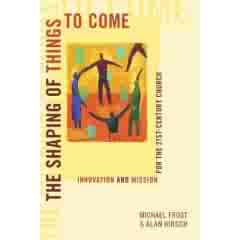
Alan Hirsch was an important part of this gathering. Alan and Michael Frost co-authored The Shaping of Things to Come (Hendrickson/Strand, 2004), and they work with the Forge missions network in Australia. I was fortunate to meet with Alan during a short-term missions trip to Australia in 2004. I was impressed with his insights and vision, and it was good to spend some time with him in connection with this gathering.
Alan gave a presentation to a diverse group of about seventy people last Friday night. Much of the subject matter for his presentation is found in his book, and from ideas he has developed for his forthcoming book The Forgotten Ways (September 2006), which echoed back to our meeting in Australia in 2004. I jotted down a few highlights:
1. Social data in the West indicates that large numbers of people are interested in God, Jesus and spirituality (variously defined), but they are not interested in the church. In fact, the church is strongly denounced as a place where vibrant, contemporary spirituality is not to be found. Put in business terms, this means that we continue to have a good "product" (Jesus), but a bad delivery system (the church).
2. The situation in Australia is worse than that in the U.S. Australia has a different history and no sense of having been a "Christian nation," so the urgency of our situation has not been felt yet to the extent it has in Australia. Even so, statistics indicate that tweny years from now, 60-70% of evangelical churches will close their doors, whether traditional or contemporary. (The jury is still out on the extent to which emerging churches are truly missional and indigenous expressions that will survive this coming reality.)
Alan then discussed elements of a missional DNA. He provided the early church and the church in China as examples and case studies of phenomenal church growth and multiplication in spite of intense persecution, no formal church buildings, no paid clergy class, and no completed canon of Scriptures (elements we assume must be present for churches in the modern context). What did the early church and the church in China share in common as factors that account for their success? In Alan's presentation the following three items stuck out for me:
1. Jesus-based movements. They both include an emphasis on Jesus at the center of their existence and efforts as opposed to an emphasis on buildings, programs, or even the Scriptures. While the story of Jesus is an essential aspect of this centering, this is distinguished from an emphasis on the Scriptures per se.
2. Missional incarnational impulse. The emphasis of both of these Jesus-centered movements was a focus on the mission Dei within the cultures in which they moved. This outward focus and activity was incarnated within individual subcultures in indigenously appropriate expressions.
3. Organic systems. Rather than static organizations, these movements were more like organic systems and movements. This and other factors indicates that both the traditional and contemporary church models and forms in the West are aberrations of a biblical, missional model and approach.
I was also able to spend a good amount of time with Dr. Curt Watke of the Intercutural Institute for Contextual Ministry. I continue to be impressed with his depth of knowledge, awareness of the missional "needs of the hour," and his ability to provide specific data and strategy for missions endeavors in the West.
This was a wonderful trip with lots of good networking, nurturing of existing and creation of new relationships, and opportunities for the future. May the new revolution of the missional movement in the West continue through these and other leaders.
Wednesday, November 30, 2005
Missional Church in the Intermountain West Meeting
This will be my last post until next week as I leave tomorrow to participate in a meeting of Missio.us, a network of missional church leaders in the Intermountain West. As part of this meeting we will be privileged to hear from Alan Hirsch, co-author with Michael Frost of The Shaping of Things to Come (Hendrickson & Strand, 2004), and national director of Forge in Australia and Canada, and a leading thinker in the area of missions in the Western world.
Next week I will post some thoughts on the results of the Missio.us meeting and Alan's presentation. Stay tuned for an electronic interview published here in the near future with Ryan Bolger of Fuller Seminary, discussing his new book with Eddie Gibbs on emerging churches.
Next week I will post some thoughts on the results of the Missio.us meeting and Alan's presentation. Stay tuned for an electronic interview published here in the near future with Ryan Bolger of Fuller Seminary, discussing his new book with Eddie Gibbs on emerging churches.
A Loving Memory for a Beloved Son
Jacob, one year ago tomorrow we lost you to your battle with depression and bipolar disorder. We will never forget the phone call that morning that let us know we had lost a beloved son. We still struggle to understand, and wrestle with doubts as to what more could have been done to help. We are so thankful for the lunch meeting with your dad just a month and a half before you left us. You are missed and loved and thought of every day as we continue to entrust you into the care of a loving God.
Love,
Dad, Wendy, Joey and Jessica
Love,
Dad, Wendy, Joey and Jessica
Tuesday, November 22, 2005
If It Walks Like a Duck: Missions as Beyond Mere Self-Perception
 For the last several years some colleagues and I have worked to articulate and model a new paradigm for response to new religions and alternative spiritualities, one that draws upon the insights of cross-cultural missions that have been used successfully in the history of Christian missions in cultural contexts around the world, but which is especially absent in the "Judeo-Christian" context of America. It has been interesting to see the responses to our work. Thus far they have largely positive, as evidenced by the book reviews given of Encountering New Religious Movements (Kregel Academic & Professional, 2004) by missions journals, periodicals, and even popular sources like Christianity Today. The only major criticism leveled thus far has come from those in countercult ministry, but even there we have some a small glimmer of hope. A few individuals and ministries have used the term "missions" in connection with their work among the new religions, and many view themselves as missionaries.
But it is not enough to merely perceive of oneself as a missionary. Missions extends beyond mere self-perception. At a minimum, a truly missional approach (as defined by the history of Christian missions and missiology) to new religions must include certain elements.
1. Missional attitudes. As was stated in the 2004 Lausanne issue group paper on postmodern spiritualities in this regard,
2. A cultural perspective rather than "cultic." In 1980 the Lausanne Committee for World Evangelization issue group that addressed "mystics and cultists" recognized these groups as unreached peoples, an insight reaffirmed by Lausanne in 2004. In the increasingly postmodern West, individuals are defining themselves by their social networks that are often intimately connected to their spirituality. While we recognize the existence of unique beliefs within the the new religions, missional approaches to these groups and movements seek to move beyond belief as the defining and controlling factor in understanding and response. 3. Incarnational presence. Just as Jesus took flesh and lived out (as well as proclaimed) the gospel to the cultures of his time, the church has been given his example and command to follow in like manner (John 20:21). Missional approaches to new religions involve the development of ongoing, respectful, loving relationships as the foundation and context for sharing the gospel of the Kingdom. Monological proclamation at people falls short of the relational aspects within culture of missional approaches."An examination of the materials produced by many evangelical countercult apologists reveals an overwhelmingly adversarial and confrontational attitude to the New Spiritualities. This confrontational attitude seems more interested in defeating spiritual foes than lovingly walking life's journey with seekers in the New Spiritualities while seeking to incarnate the gospel. Evangelicals are encouraged to foster attitudes that facilitate service as ambassadors of Christ."
4. Application of cross-cultural missions methodology. Returning to the 2004 Lausanne paper once again,
"The development of an incarnational ministry necessarily involves certain processes of study and reflection about unreached people groups and how the gospel can be communicated effectively to them. Missiologists refer to these processes by the expression 'critical contextualzation.'I appreciate that some in the countercult think of themselves as missionaries, and their ministries as missional. However, self-perception is not always reality. We've heard the phrase before that if it walks like a duck and quacks like a duck, then it's a duck. To modify the phrase, if it walks like an apologist, and quacks heresy refutation, then its a countercultist, not a cross-cultural missionary. Missions involves moving beyond mere self-perception to the embrace and utilization of missional ways of being and acting.
"Contextualization involves communicating the gospel about Christ in a manner that enables people in specific cultural settings to truly and honestly grasp what the gospel is about and to experience the risen Christ within that culture."
Theological Engagment with Popular Culture: Surely We Can Do Better
 The latest Harry Potter film hit the theaters last weekend, and it did very well financially, as throngs of Potter fans filled theaters across the country. But as with the previous films, and the books upon which they are based, a small chorus of evangelical voices have begun to complain, raising concerns of alleged evil and Witchcraft, creatively packaged as a means of desensitizing young people, opening doorways into the occult. (As an aside, I am not aware of similar concerns raised by Christians in previous generations with the magical framework and Witches in The Wizard of Oz, or the Wizard in The Seventh Voyage of Sinbad. It would make for a fascinating cultural study as to why the lack of concern then, but the uproar now.)
It will remain to be seen whether similar concerns will be raised with the December release of The Chronicles of Narnia. Typically, fewer evangelicals raise concerns over the magic of C. S. Lewis and J. R. R. Tolkien, but assuming their arguments are valid in Potter contexts it would seem inconsistent not to apply it to fantasy written by Christians, but that's a big assumption. I am not encouraging critique of either of these authors. I am simply noting an inconsistency.
It is not my intention with this post to weigh in on the long-standing Potter controversy in conservative evangelical circles. Rather, I would like to make a few suggestions for how evangelicals might more positively engage popular culture.
1. Remember how stories function. One of the main arguments against Potter has been the alleged occultism and Witchcraft found in the books and movies. But before rushing to judgment it will be helpful for us to remember how stories function, whether in the form of literature or film, in drawing upon sources to tell their tales. C. S. Lewis stated that, "Within a given story any object, person, or place is neither more nor less nor other than what the story effectively shows it to be. The ingredients of one story cannot 'be' anything in another story, for they are not in it at all." (C. S. Lewis, "The Genesis of a Medieval Book," as quoted by Walter Hooper, C. S. Lewis: A Companion and Guide [HarperSan Francisco, 1996], 430.) With this important consideration in mind, it would seem that even if we grant that Rowling draws upon actual elements of Witchcraft and occultism in her stories, these elements take their meaning as they are defined by the author in the story, and it is a mistake to confuse them with their meanings outside the framework of the story.
2. Rethink evangelical engagement with popular culture. If one were to conduct a "person on the street" poll and ask the average person what evangelicals view positively in popular culture, I believe it would be a short list. We are known more by what we are opposed to rather than what we affirm. In response to popular culture evangelicals tend to either a) oppose it, b) ignore it, or c) create their own version of popular culture. I'd like to suggest another alternative, and that is a more positive and theologically balanced engagement with popular culture. Evangelicals whine and wring their hands over the success of things like Harry Potter, but whose fault is that? Where are the evangelicals incorporating creativity with their spirituality in our generation like Lewis and Tolkien did for previous generations? And we desperately need evangelicals with academic training in culture (including popular culture) and theology that integrates these disciplines in order to develop a practical theology for creative cultural engagement in the West in the twenty-first century.
As our culture continues to explore its fascination with story, image, and cinema, evangelical critiques of the type frequently directed at Harry Potter will exacerbate our increasing estrangement from popular culture. Let's rethink this thing and not dig our hole any deeper.
Monday, November 21, 2005
Jesus & Paul: Kingdom Community, Not Church Planting
 Once in a while it's good to realize that I'm not alone in my thinking. I don't need to be vindicated, but it is comforting to know that I haven't completely lost my theological marbles.
About a month ago I was on staff part time as an associate pastor in a church plant here in Utah. I was asked to preach a few times, and I like using such opportunities (including this blog) to push the envelope by being provocative in the hopes of stimulating fresh thinking among evangelicals and others. During one of my sermons I stated that in my view Paul was not a church planter. Despite what we often hear in the received wisdom, I said that Paul was primarily an ambassador announcing the Kingdom, and that a byproduct (if you will) of this herald and embodiment of the Kingdom was the formation of the church, but that Paul was not intentionally planting churches per se. (Incidentally, this and other perspectives were not well received by the pastor and I made the decision to pursue my theological and missiological deconstruction and reconstruction apart from being a part of this church's staff.)
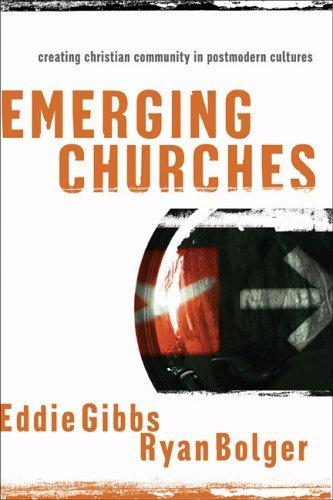
Before you throw up your hands and say to yourself, "Morehead has definitely lost it," consider the fact that much the same perspective has been offered by others that the reader may be more willing to consider than my own. For example, I am currently enjoying the book Emerging Churches (Baker Academic, 2005) by Eddie Gibbs and Ryan Bolger, and in the book I was pleased to read the following:.
"Jesus was not a church planter. He created communities that embodied the Torah, that reflected the kingdom of God in their entire way of life. He asked his followers to do the same. Emerging churches seek first the kingdom. They do not seek to start churches per se but to foster communities that embody the kingdom....Jesus created an alternative social order, one built on servanthood and forgiveness, through the activities he performed as a leader of a counter-temple movement. Paul continued this model as well. 'If we stated the agenda of Paul's mission in modern terms, it seems clear that he was building an international, anti-imperial, alternative society embodied in local communities.'...missional communities differ greatly from current forms of church planting." (pp. 59-60)I agree, and their sentiments echo my own feelings on the issue. This assessment by a professor of church growth and a missiologist is worth considering. I hope that others will reassess other facets of theology, missiology, and ecclesiology with the challenges posed by the emerging cultures. The shifts in culture may provide us with an opportunity to recapture a more biblical understanding and approach.
Sunday, November 13, 2005
Understanding Before Critique: Let's Really Become Conversant with the Emerging Church
 I recently became aware of a post in an Internet group of the countercult community. A post had been made sharing links with resources critical of the evangelical emerging church movement, and it stated that if one wants to see the effects of the emerging church on someone from the countercult to see my Blog. I contacted the person making this post through personal email to respond to problems with the post, and to share concerns about countercult (and some apologetic) critiques of the emerging church. A few of these thoughts are included here.
First, I am no longer a part of the evangelical countercult community. While I have worked within this community in years past, I no longer utilize the paradigm and methodologies of this community, neither do I identify with them as a member of their community. Instead, I utilize an interdisciplinary, cross-cultural missions approach in the area of new religions and alternative spiritualities, and I consider myself a missionary and missiologist.
Second, it is inaccurate to say that I have been influenced (positively or negatively) by the emerging church movement. Over the last several years, I have been influenced by fresh reflection biblical studies, the history of Christian missions, anthropology, religious studies, the sociology of religion, intercultural studies, and most notably, missiology. This interdisciplinary perspective, with a primary influence coming from missions, has been the driving force behind my move from an apologetic to a missional paradigm (that also incorporates a culturally-relevant and intellectually rigorous apologetic element when appropriate) in the area of new religions. My study and work with the emerging church has likewise been influenced by these studies, but the emerging church has not colored my other areas of ministry.
Third, discerning and missional Christians should be very concerned by some of the criticism of the emerging church in the evangelical world. One aspect of it has been simplistic in its analysis, resulting in condemnation of the movement to the point of labeling it "a threat to the gospel," as seen in denunciations by Albert Mohler, and the Southern Baptists. The assessment and indictment by some in the countercult community is even more disturbing, including the simplistic and critical aspects of the previously mentioned critiques, as well as an unfortunate anti-Catholic element.
Perhaps more disconcerting, given his status as a scholar and the quality of his previous work, is the problematic critique of the movement of D. A. Carson. While I have the utmost respect for his scholarship in the area of his expertise, I fear that his latest work is a reminder of the dangers of straying from one's specialty. His book, Becoming Conversant with the Emerging Church Movement, is frequently cited by critics of the emerging church as if it were the definitive summary and critique. Carson's book does provide some criticisms worthy of consideration, but overall the book is flawed, both in its understanding of the emerging church, and in many of the concerns it raises. I refer the interested reader to a few sources that confirm my concerns. Eddie Gibbs recently wrote a brief review for Christianity Today that provides reflections from a church growth and missions perspective. Dr. David Mills wrote a good critique of the ideas presented in book from Carson's lectures at Cedarville. And Fuller missiologist Ryan Bolger has some good critical thoughts on the book found at his Blog. The point of reading these articles critical of Carson is to recognize that Carson's book is flawed and that it does not live up to it's title: its content was written by someone who was not truly conversant with the emerging church.
Fourth, the uncritical acceptance of Carson's critique by the countercult and some evangelical apologists demonstrates both the unfortunate willingness to accept that which confirms our immediate suspicions without careful analysis, and the all too common leveling of criticism before genuine understanding. I don't believe the emerging church represents "the answer" for the church in the Western world, but at least they are asking some of the right questions, and experimenting in response to cultural change. A successful church in the West will be found in a redisovery of and new commitment to the missio Dei, and I hope the emerging church places greater emphasis here in the near future. But regardless of one's view of the emering church, these movements deserve to be understood, appreciated, and critiqued fairly.
All of this causes me to wonder that if the "discernment community" has such serious problems in fairly assessing a movement within its own fold, how far can we trust their analysis and prescription for the challenge of new religions in the West?
For those interested in a new book that is now available via Amazon.com, I recommend a book co-authored by Eddie Gibbs and Ryan Bolger titled Emerging Churches: Creating Christian Community in Postmodern Cultures (Baker Academic, 2005). The book draws upon research in the U.S. and U.K., as well as the expertise and experience of the co-authors in the areas of missiology and church growth.
And check back with this Blog in December. Ryan has agreed to an electronic interview on the subject of emerging cultures, emerging church, and emerging spiritualities that will be published in installments here in the near future.
Friday, November 11, 2005
The Changing Face of Jesus
 Growing up in northern California I remember a painting of Jesus that was hanging in the entry way of the church I attended for several years. It was one that is familiar to many American Christians, reflecting a European conception of Christ.
As I grew older and pursued biblical and historical studies I came to recognize that the face of Jesus looked very different. Jesus wasn't a blue eyed European, but as a Jew he had the Semitic features common to his ethnicity and period of history.
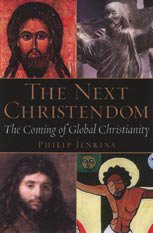
But as I study not only theology, but also the cultural and historical shifts in Christendom in the twenty-first century, I think we can see not only the changing face of Jesus, but related and identified with that, the changing face of the church as well. I just finished Jenkins' The Next Christendom, and the following quotes are relevant to the changing face of Jesus and the church, a face that challenges Christendom in the Western world, and most especially the Northern Hemisphere:
African and Latin American Christians are people for whom the New Testament Beatitudes have a direct relevance inconceivable for most Christians in Northern societies. When Jesus told the "poor" they were blessed, the word used does not imply relative deprivation, it means total poverty or destitution. The great majority of Southern Christians (and increasingly, of all Christians) really are the poor, the hungry, the persecuted, even the dehumanized. India has a perfect translation for Jesus' word in the term Dalit, literally "crushed" or "oppressed." This is how that country's so-called Untouchables now choose to describe themselves: as we might translate the biblical phrase, blessed are the Untouchables.I think I am beginning to see a new face of Jesus in the twenty-first century.
Knowing all this should ideally have policy consequences, which are at least as urgent as redistributing church resources to meet the needs of shifting populations. Above all, the disastrous lot of so many Christians worldwide places urgent pressure on the wealth societies to assist the poor. A quarter of a century ago, Ronald J. Sider published the influential book, Rich Christians in an Age of Hunger, which attacked First World hypocrisy in the face of the grinding poverty of the global South. The book could easily be republished today with the still more pointed title Rich
Christians in an Age of Hungry Christians, and the fact of religious kinship adds enormously to Sider's indictment. When American Christians see the images of starvation from Africa, like the hellish visions from Ethiopia in the 1980s, very few realize that the victims share not just a common humanity, but in many cases the same religion. Those are Christians starving to death. (Jenkins, 266-217)

Wednesday, November 09, 2005
Magick, the Supernatural & Re-Enchantment
 I read the Wildhunt Blog today, a Blog that provides some interesting perspectives on spiritual issues from a Pagan perspective. The Blog recently posted some comments on magick and the supernatural, and in the process alerted me to an article by Peggy Flatcher Stack in The Salt Lake Tribune titled "Where faith, magic meet". The article contains a number of items worthy of consideration. Here's one brief but interesting quote:
Today, some Christians shun magical fiction like Harry Potter and The Lord of the Rings or "The Matrix," fearing their allure will replace religious faith.Unfortunately I think the statement above is accurate, as the plethora of evangelical books, as well as website and newsletter articles condemning Potter, and Lord of the Rings demonstrate. With the forthcoming Narnia film in December this issue will take center stage once again, and may be accompanied by further articles and books expressing alarm at the magic of C. S. Lewis.
In the acceptance of a sacred-secular split in Western Christendom with the Enlightenment, and the resulting disenchantment of the world, did the church go too far in banning the "magical" activity of the Divine in the cosmos? With the postmodern emphasis on re-enchantment, can we rethink the place and extent of Divine activity in the creation that articulates a robust biblical worldview and properly distinguishes it from Pagan magickal ideas?
Tuesday, November 08, 2005
Further Thoughts on Syncretism: Future Battles Between North and South?
 I received a lot of comments on the last post touching on syncretism. This is an ongoing issue of consideration for me, and I believe it will be an item of continuing concern over time with the global developments in Christendom.
As I mentioned in a comment in the previous post, Philip Jenkins, in his book, The Next Christendom (Oxford, 2002) discusses a shift in the number of adherents to Christianity globally from the Northern Hemisphere to the Southern Hemisphere. There are a number of important ramifications associated with this. Not only will Northern expressions of Christianity will be increasingly less influential in the global faith, but Northern Christianity will be challenged by the different expressions of the faith in the South, particularly in Africa, where independent churches "accept prophetic visionary ideas that have long since fallen out of fashion in the West" (p. 120). With the West's increasing awareness of Christianity in the South, the charge will likely be made with increasing frequency that "many Southern churches are syncretisitc, they represent a thinly disguised paganism, and all in all they make for a 'very superstitious kind of Christianity,' even 'post-Christianity'" (p. 121).
Jenkins goes on to point out that a more gracious assessment of this situation is possible, and that what is likely going on is the development of contextualized forms of the Christian faith, and a return to a more biblical worldview that does not entail the sacred-secular split found in Enlightenment-influenced Western Christianity. If for no other reason than to respond to increasing charges of syncretism by Northern Christianity aimed at the Southern Hemisphere, the issue of syncretism, and its relationship to contextualization and missiology, is a topic that needs to be put on a front burner and addressed in fresh ways in light of changing cultural circumstances. My hope is that if the Northern expressions of Christianity, including American evangelicalism, continue to decline in growth and influence, we can still resist a knee-jerk boundary maintenance response to the situation in the South, and instead, can assess the situation fairly and soberly in light of all the relevant data.
As I thought about the topic of syncretism lately I pulled a file on the topic and was reminded of my conversations with my Australian friend and colleague Philip Johnson. In his research that he passed along in 2004, he noted a few items worthy of our reflection, and hopefully, further spade work in research as well. I pass it along in the hopes of keeping the conversation, and our thinking, moving forward.
1. Etymology. Philip dug a little and noted that the term "syncretism" may have gone back to the Greek, and then later into French, and then into English. Key to our analysis here is how the term originated, and how its meanings and usages have changed over time in differing contexts.
2. Positive and negative. We might differentiate between constructive and destructive, or positive and negative syncretism. Although we usually think of the term in wholly negative ways in Western evangelicallism, some have recognized that all efforts at contextualization are in a sense syncretic. Indeed, the noted Scottish missiologist Andrew Walls has stated that Christianity is potentially the most syncretistic religion of all because of its willingness historically to engage its truth claims with indigenous cultures in terms of communication and inculturation.
3. Alternative terminology. The late New Zealand missiologist, Harold Turner, specialized in new religions in Africa and primal societies. He was associated with Leslie Newbigin, and was interested in missions in connection with "deep culture" rather than superficial cultural observances. He suggested that since "syncretism" has accrued such negative baggage in the West that alternative terminology might be considered. He proposed the term "synthetism."
4. Relationship to contextualization. The relationship between gospel and culture, ecclesiology and its expression in culture, is extremely important, particularly in light of changing global demographics between North and South. The ways in which the faith is expressed in and through local cultures, the dangers of the contextualization pendulum swinging too far into syncretism, and the opposite error of confusing genuine inculturation with syncretism, are key issues that must be considered in missiology.
5. Third World theologies. How will Christendom in the North respond to new theologies that will develop in the South? Will we recognize and accept our changing global and historical role and come alongside our Southern brothers and sisters in exploration and development of new theologies, or will be attempt to impose Western theologies and uncritically label new efforts as heresies?
A little poking around the Internet will also reveal some interesting gems that might provide some additional considerations, including the following:
Gerald Gort (ed), Dialogue and Syncretism: An Interdisciplinary Aproach (Eerdmans, 1989)
Andrew Walls (ed), Exploring New Religious Movements: Essays in Honour of Harold W. Turner (Mennonite Board of Mission, 1990)
Wednesday, November 02, 2005
Syncretism: Caution and Fear in Creative Contextualization and Theologizing
 Evangelical fears of syncretism have surfaced in two separate instances in my experiences recently. In the first instance, a professor raised concerns about syncretism in connection with a cross-cultural missions approach by creative evangelicals in Australia who utilize tarot cards to share the gospel at Mind-Body-Spirit festivals.
In the second instance, a fellow seminary student shared concerns about syncretism in connection with class discussions on contextualizing the gospel in cultures, and in reassessing theologies in light of new historical and cultural considerations.
Syncretism is an important concern. Surely the gospel and expressions of Christianity have been compromised in cultures through inculturation that has been inappropriate. But contextualization and theologizing in cross-cultural contexts always runs the risk of syncretism. My concern is that evangelicals let their fears of syncretism prevent them from considering new approaches at contextualization in missions, and new theologizing, whether in cross-cultural contexts, or in reconsideration of cherished theological ssumptions in Western theology. Surely we need to consider the history of theology that has come before us, but has all the fresh thinking and activity already been done through creedal development and the Reformation? Or should the church in each generation be receptive to theologizing in light of cultural change, and fresh illumination by the Holy Spirit?
Tuesday, October 25, 2005
Intersecting Seminary Classes and Theological Reflection
Two of my seminary classes have intersected this week. In my New Testament survey class we looked at N. T. Wright's writings on the historical Jesus, and have examined John's Gospel, particularly the prologue. Wright's view of the historical Jesus has been helpful n serving as a check against the tendency for us all to create conceptions of Jesus that fit our own cultural presuppositions, but which don't always represent the Jesus of Second Temple Judaism. The discussion of John's Gospel has noted how the Logos in the prologue echoes the Old Testament, particularly the creation narrative as well as the concept of divine wisdom. Johannine theology takes these Hebraic concepts and then communicates or theologizes them into the cultural contexts of the first century, including Judaism, Hellenism, and Gnosticism.
The intersection came as the New Testament survey class overlapped my theology class as we discussed the incarnation and Christology in light of John 1. As we neared the completion of our discussion on exegesis and creedal affirmations of the humanity, deity, and two naturs of Christ, the instructor asked if there were any other questions or comments. Finding it hard to resist, I threw in my two cents worth from intercultural studies.
Having studied theology and missiology I recognize the strong interrelationship between theology and culture. God has communicated Himself through differing human cultures, and in order to understand this self-revelation we need to understand not only the theological concepts, but also how those are wrapped up in cultural forms. We also need to understand the culture-bound perceptions of our own theologies, and how these influence our understanding of Scripture. Once we have taken these steps we can then struggle with how to communicate supracultural theological truths into another culture.
As I recently pondered John's prologue through my conceptual lenses of culture, theology, and missiology, I saw him utilizing a methodology as I've suggested above. He skillfully paints a unique portrait of Christ that is informed by the Hebrew Scriptures, but which communicates Christ in appropriate cultural forms.
As a result of the class study and discussion, three questions came to mind today. First, while we are working on intercultural studies in an intercultural environment in Utah, to what extent are we truly making our learning and missional praxis intercultural (and interdisciplinary), or are we replicating ways of "doing church" and theological education that have been done in other places regardless of cultural context? Second, while there are a handful of large churches in Utah that practice passive missional approaches to church and thereby reach disaffected or searching LDS, what would proactive missional approaches look like that strategically work to bring the church as the eschatological community of God into relationships with the subcultures of Utah? Third, I was reminded recently that the Hebrews did not engage in speculative theology, but instead spoke of the revelation of God gained through their experience. While it is important to recognize the distinction between orthdoxoy and heresy, and to understand the creeds as definitions and boundaries erected in response to heretical challenges, is there room in our theology for mystery and less for mental gymnastics in formulating creedal affirmations and doctrinal statements, and thus less room for our speculative theology? Has our Greek heritage moved our theology away from its Hebrew roots more than we know and caused us to engage in theological speculation that would not have been entertained by our Hebrew forebears?
The intersection came as the New Testament survey class overlapped my theology class as we discussed the incarnation and Christology in light of John 1. As we neared the completion of our discussion on exegesis and creedal affirmations of the humanity, deity, and two naturs of Christ, the instructor asked if there were any other questions or comments. Finding it hard to resist, I threw in my two cents worth from intercultural studies.
Having studied theology and missiology I recognize the strong interrelationship between theology and culture. God has communicated Himself through differing human cultures, and in order to understand this self-revelation we need to understand not only the theological concepts, but also how those are wrapped up in cultural forms. We also need to understand the culture-bound perceptions of our own theologies, and how these influence our understanding of Scripture. Once we have taken these steps we can then struggle with how to communicate supracultural theological truths into another culture.
As I recently pondered John's prologue through my conceptual lenses of culture, theology, and missiology, I saw him utilizing a methodology as I've suggested above. He skillfully paints a unique portrait of Christ that is informed by the Hebrew Scriptures, but which communicates Christ in appropriate cultural forms.
As a result of the class study and discussion, three questions came to mind today. First, while we are working on intercultural studies in an intercultural environment in Utah, to what extent are we truly making our learning and missional praxis intercultural (and interdisciplinary), or are we replicating ways of "doing church" and theological education that have been done in other places regardless of cultural context? Second, while there are a handful of large churches in Utah that practice passive missional approaches to church and thereby reach disaffected or searching LDS, what would proactive missional approaches look like that strategically work to bring the church as the eschatological community of God into relationships with the subcultures of Utah? Third, I was reminded recently that the Hebrews did not engage in speculative theology, but instead spoke of the revelation of God gained through their experience. While it is important to recognize the distinction between orthdoxoy and heresy, and to understand the creeds as definitions and boundaries erected in response to heretical challenges, is there room in our theology for mystery and less for mental gymnastics in formulating creedal affirmations and doctrinal statements, and thus less room for our speculative theology? Has our Greek heritage moved our theology away from its Hebrew roots more than we know and caused us to engage in theological speculation that would not have been entertained by our Hebrew forebears?
Tuesday, October 18, 2005
Eddie Gibbs Reviews Carson's Take on Emerging Church
Christianity Today has an article commenting on D. A. Carson’s book on the emerging church. The article is by Eddie Gibbs who has co-authored a book on this topic with Ryan Bolger due out in December through Baker Academic. Bolger had greater concerns about the book on his Blog than does Gibbs, but one point jumped out at me in Gibbs’ conclusion where he said, “The distinction between Carson and emergent leaders may lie in the difference between the faith as a ‘bounded’ set, one that defines who is inside and who is outside, and a ‘centered’ set, which is more concerned with the direction in which people are traveling, toward or away from Christ.” I believe this insight is important in understanding not only the different perspectives between the emerging church and its critics, but also the differences between missional and apologetic approaches to emerging spiritualities. For further exploration of this thought see my previous post on set theory and missional modalities.
Lessons from Missions to Muslims: Distaste for the Combative Approach
The history of Christian missions is filled with examples of those who have been willing to experiment with differing approaches to reach different cultures. These attempts have resulted in successes and failures, and a healthy debate over methodology. One striking example of such debate comes from missions to Muslims. In this context, missionaries and strategists have engaged in healthy debate over various approaches and aspects such as contextualization, specifically over varying degrees and models of contextualization known as the C1 to C6 contextualization spectrum.
Those of us in missions to the West can learn a lot from these missional experiments, and from the debate that results, regardless of the people groups we work with. For example, I ran across an article by Charles Kraft titled "My Distaste for the Combative Approach." Much of the concerns and criticisms he brings to combative approaches to Muslim missions is also relevant to evangelical approaches to new religions. For example, those who advocate a combative approach to Muslims look to Jesus' stern rebuke of Jewish religious leaders in the gospels for biblical support for their methods, as do those using combative approaches to new religions. But Kraft writes that
We could further nuance Kraft's words above to make it more applicable to the context of new religions, but Kraft raises some important points for consideration. I and others have argued that the texts often used to support combative approaches to new religions are the wrong texts, taken out of context, misapplied to new religions, thus resulting in inappropriate methodologies. Kraft raises similar concerns about these texts as applied to Muslims.
Beyond this, Kraft notes that, in general, combative evangelical approaches to Muslims involves several questionable assumptions. I would argue that these to are shared by combative evangelicals approaches. I will quote again from Kraft's article and provide brief comments on a few of the points he raises.
"1. That all Muslims know better and that, therefore, we do right to condemn their whole aproach to relating to God (as Jesus did with the Pharisees)." Is it accurate to assume that most Mormons, for example, really "know better," and therefore it is appropriate to treat them as apostates or heretics?
"2. That the meager success of our combative approach to Muslim evangelism is the fault of the unresponsiveness of our Muslim receptors, not of the approach itself - we do not, therefore need to examine critically that approach and to experiment with new approaches." While evangelicals in ministry to new religions are loathe to admit any failures in methodology, not a few have lamented the apparent unresponsiveness of Mormons, Jehovah's Witnesses, and many other new religions. Are they truly unresponsive to the gospel, or does the combative approach really not communicate the gospel in their religious frame of reference?
"3. That we deny or compromise the truth God has given us if we strategize our witness in such a way that we focus first on those Christian truths most acceptable to Muslims, leaving more difficult truths for later in the process." How many times have evangelicals engaged Jehovah's Witnesses over trinitarian theology as part of an "evangelistic" attempt only to come away with both parties more deeply entrenched in their respective theologies? Is it possible that we put the doctrinal cart before the horse (not to mention unnecessary stumbling blocks) by asking the new religionist to assent to doctrinal truths that may not be paramount in the initial stages of convesion and which might well be apprehended better in growing discipleship? Is assent to creedal orthodoxy the best place to start with new religionists as potential converts? If it is, why then don't we start this way with our children where we are satisfied with simple faith rather than a systematic theology.
"7. That the lack of love we often manifest in our approaches to witness has nothing to do with the way hearers perceive the love of the Christ we recommend." I know that evangelicals feel they are loving when they stand outside the Manti pageant, or new temple openings, or other events and sites, and pass out literature or hold up signs viewed by LDS as demeaning of the sacred. But regardless of evangelical intent the perception on our hearers is that we are doing anything but demonstrating the love of Christ.
Kraft includes discussion of other assumptions evangelicals make in traditional approaches to Muslims, and then follows this with five aspects that inform a more culturally-sensitive aproach to Muslims, that are also applicable to mission to new religions.
After reading the article, and reflecting on Kraft's ideas, I have to say that I'm with him, in both Muslim and new religion contexts. I have a strong distaste for the combative approach. But unfortunately I don't think it will disappear any time soon.
Those of us in missions to the West can learn a lot from these missional experiments, and from the debate that results, regardless of the people groups we work with. For example, I ran across an article by Charles Kraft titled "My Distaste for the Combative Approach." Much of the concerns and criticisms he brings to combative approaches to Muslim missions is also relevant to evangelical approaches to new religions. For example, those who advocate a combative approach to Muslims look to Jesus' stern rebuke of Jewish religious leaders in the gospels for biblical support for their methods, as do those using combative approaches to new religions. But Kraft writes that
"Jesus was very hard on (combative toward) those who knew a lot but practiced little of what they knew (i.e. Scribes and Pharisees). He was, however, gentle toward those who knew little (the common people). To the latter Jesus adapted his manner of life, his language, his total approach to the mesage he came to bring. Indeed, he even identified with their in their criticisms of the orthodoxy of those who represented 'God's true way' to them. The question I seek to raise is whether contemporary Muslims fall into the category of those whom Jesus sought to combat because they lead themselves and others astray (Matt. 23), or into the category of those to whom Jesus would have adapted. Undoubtedly, there are some in each category."
We could further nuance Kraft's words above to make it more applicable to the context of new religions, but Kraft raises some important points for consideration. I and others have argued that the texts often used to support combative approaches to new religions are the wrong texts, taken out of context, misapplied to new religions, thus resulting in inappropriate methodologies. Kraft raises similar concerns about these texts as applied to Muslims.
Beyond this, Kraft notes that, in general, combative evangelical approaches to Muslims involves several questionable assumptions. I would argue that these to are shared by combative evangelicals approaches. I will quote again from Kraft's article and provide brief comments on a few of the points he raises.
"1. That all Muslims know better and that, therefore, we do right to condemn their whole aproach to relating to God (as Jesus did with the Pharisees)." Is it accurate to assume that most Mormons, for example, really "know better," and therefore it is appropriate to treat them as apostates or heretics?
"2. That the meager success of our combative approach to Muslim evangelism is the fault of the unresponsiveness of our Muslim receptors, not of the approach itself - we do not, therefore need to examine critically that approach and to experiment with new approaches." While evangelicals in ministry to new religions are loathe to admit any failures in methodology, not a few have lamented the apparent unresponsiveness of Mormons, Jehovah's Witnesses, and many other new religions. Are they truly unresponsive to the gospel, or does the combative approach really not communicate the gospel in their religious frame of reference?
"3. That we deny or compromise the truth God has given us if we strategize our witness in such a way that we focus first on those Christian truths most acceptable to Muslims, leaving more difficult truths for later in the process." How many times have evangelicals engaged Jehovah's Witnesses over trinitarian theology as part of an "evangelistic" attempt only to come away with both parties more deeply entrenched in their respective theologies? Is it possible that we put the doctrinal cart before the horse (not to mention unnecessary stumbling blocks) by asking the new religionist to assent to doctrinal truths that may not be paramount in the initial stages of convesion and which might well be apprehended better in growing discipleship? Is assent to creedal orthodoxy the best place to start with new religionists as potential converts? If it is, why then don't we start this way with our children where we are satisfied with simple faith rather than a systematic theology.
"7. That the lack of love we often manifest in our approaches to witness has nothing to do with the way hearers perceive the love of the Christ we recommend." I know that evangelicals feel they are loving when they stand outside the Manti pageant, or new temple openings, or other events and sites, and pass out literature or hold up signs viewed by LDS as demeaning of the sacred. But regardless of evangelical intent the perception on our hearers is that we are doing anything but demonstrating the love of Christ.
Kraft includes discussion of other assumptions evangelicals make in traditional approaches to Muslims, and then follows this with five aspects that inform a more culturally-sensitive aproach to Muslims, that are also applicable to mission to new religions.
After reading the article, and reflecting on Kraft's ideas, I have to say that I'm with him, in both Muslim and new religion contexts. I have a strong distaste for the combative approach. But unfortunately I don't think it will disappear any time soon.
Sunday, October 16, 2005
Bolger and "Seeker" Churches
 Ryan Bolger is a missiologist who serves as assistant professor of church in contemporary culture at Fuller Seminary in California. His blog is a regular part of my viewing, and an October 12 post titled "Please, no more doing church for 'them'," is worth a read regardless of your perspective on the emerging culture and emerging church. I recommended this article to a few of my contacts, some of whom are missionally minded, and a few who are more at home with attractional church, and received a few complaints from those in the latter group. But aside from some of the concerns from attractional church adherents, I'd like to encourage us not to miss two important points raised in Bolger's post.
First, Bolger points out that for most churches the worship service is the focal point for trying to connect with the community. Bolger rightly points out the inappropriateness of the assumption behind this practice, namely that "following Jesus is about going to church." Never mind the fact that church's will more often than not miss really connecting with the community with this assumption because they are largely out of touch with the subcultures they would like to reach, as Bolger also reminds us. Beyond this, an emphasis on the worship service as the defining point of Christian spirituality represents another example of truncated Christian spirituality in America, if not the broader Western world.
Second, Bolger argues that we need to shift to truly being missional in the Western world by engaging the culture in "the world" and embody the Kingdom of God beyond the "sacred space" of the church building. Such a state of being and acting moves us beyond the sacred/secular split of modernity, and provides an ongoing place for contact.
Regardless of whether you agree with Bolger's conclusions or not, I hope the reader will not lose sight of these important considerations, and will consider Bolger's thesis.
Friday, October 14, 2005
Missional Gadflies

mis*sion*al a primary commitment to God's missionary purposes in the world, and to the missionary calling of the people of God.
gad*fly a usually intentionally annoying person who stimulates or provokes others especially by persistent irritating criticism.
Thursday, October 13, 2005
Rolland Allen and St. Paul's Missions Methodology
 Roland Allen was an Anglican missionary to China from 1895-1903. Upon his return from the mission field he devoted the next 40 years to writing on missionary principles. His book Missionary Methods: St. Paul's or Ours? (Eerdmans, 1962) represents a classic in missions literature. Allen demonstrates that Paul's strategy was to plant mature, self-sufficient churches in relatively short periods of time. By contrast, Allen shares a stinging criticism of western missionary methods in the frequent establishment of paternal and dependent relationships between missionaries, sending agencies or churches, and church plants.
I found myself in agreement with Roland's general thesis, as well as numerous details within it. Of particular interest was his recognition of the positive rhetorical aspects of Paul's preaching, particularly in the messages at Lystra and Athens. He notes that Paul's preaching contained "a conciliatory, sympathetic attitude towards the heathen. There was no violent attack, no crude and brutal assault upon their beliefs, still less was there any scornful or flippant mocking of their errors" (p. 70). Writing of a previous missionary generation he stated "it is happily rare to hear a missionary revile the religion of other people, or hold up the objects of their veneration to scorn and ridicule, and it is to be hoped that it may soon cease altogether" (p. 68). Unfortunately, this is no longer a rarity in contemporary missions overseas and in North America, and this provides an additional example of our how our missionary and apologetic methods do not reflect the Pauline model.
Subscribe to:
Posts (Atom)